
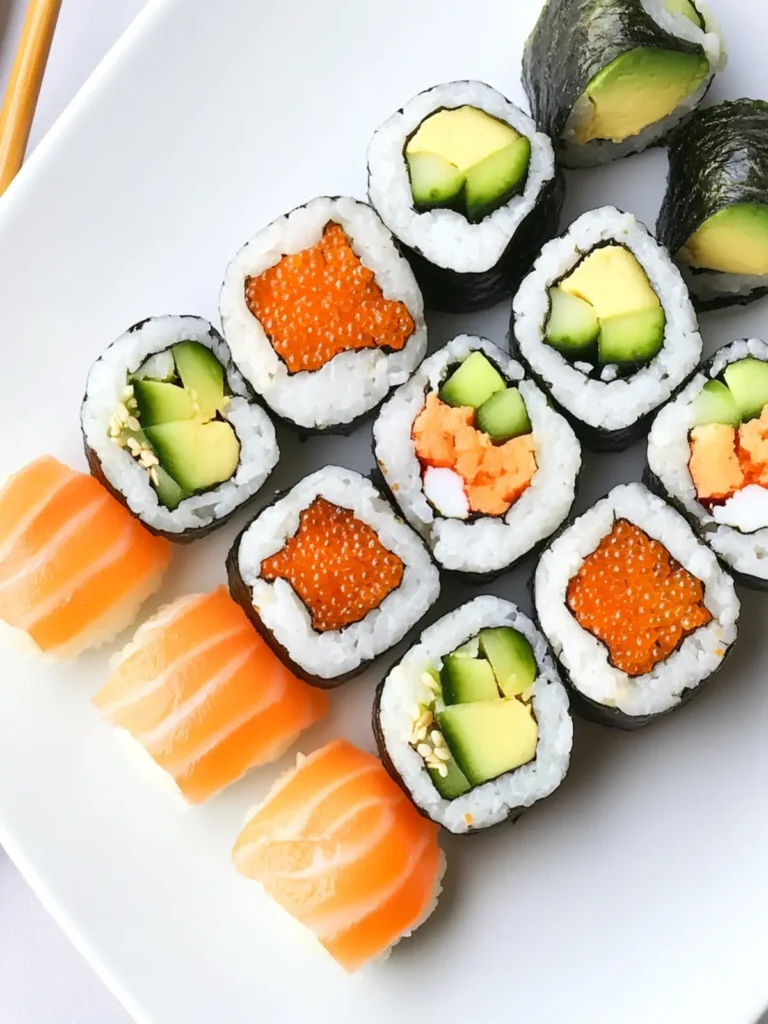
The moment I first unrolled a bamboo mat to make sushi, I knew I was embarking on a culinary adventure. The vibrant colors of fresh tuna, crisp cucumber, and creamy avocado danced in front of my eyes, each ingredient promising a blend of flavors that would take me straight to the heart of Japan. With its perfect balance of vinegared rice and seasonal fillings, sushi is more than just a meal; it’s a celebration of simplicity and elegance that you can enjoy at home.
Whether you’re preparing for a casual lunch or looking to impress guests at your next dinner party, making Traditional Japanese Sushi from scratch is easier than you might think. This recipe invites you to explore the artistry of sushi, allowing for creativity with every roll. So, roll up your sleeves, gather your favorite ingredients, and let’s transform your kitchen into a sushi haven!

Why is Japanese Sushi so special?
Fresh Ingredients: The beauty of Japanese Sushi lies in its reliance on high-quality, fresh components that guarantee an unforgettable taste and texture.
Creative Freedom: Crafting sushi offers endless possibilities; personalize your rolls with various ingredients, from fresh fish to vibrant vegetables.
Easy to Master: With simple techniques, this recipe makes sushi accessible to all skill levels—perfect for first-timers or seasoned home chefs alike.
Crowd-Pleasing Delight: Impress family and friends with homemade sushi, transforming any gathering into a memorable culinary experience.
Cultural Experience: Beyond just a meal, sushi invites you to celebrate and appreciate Japanese culture, making every bite a flavorful journey.
Dive deeper into your culinary adventure with other delightful recipes and tips on creating the perfect sushi experience!
Japanese Sushi Ingredients
For the Sushi Rice
• Sushi Rice – This is the heart of your sushi; ensure it’s short-grain for the ideal sticky texture.
• Water – Accurately measure to match the rice for perfect cooking; usually a 1:1 ratio works best.
• Rice Vinegar – Essential for seasoning; it imparts the characteristic tanginess that defines Japanese sushi.
• Sugar – Balances acidity from the vinegar; a pinch goes a long way in enhancing flavor.
• Salt – Elevates the overall taste of the sushi rice; use kosher salt for the best results.
For the Filling
• Fresh Tuna or Salmon (sashimi grade) – Ensure your seafood is the best quality for a delicious, safe sushi experience.
• Cucumber – Adds crunch and freshness; feel free to substitute with radish or even cooked shrimp.
• Avocado – Offers a creamy texture that pairs beautifully with the fish; be sure it’s ripe for the best flavor.
For Assembly
• Nori (seaweed) – The classic sushi wrap; it adds a delightful umami flavor; try soy paper for a unique twist.
• Soy Sauce – Perfect for dipping and enhancing umami; opt for low-sodium for a healthier touch.
• Wasabi – A little goes a long way; use fresh wasabi for authentic spice that complements the fish.
• Pickled Ginger (gari) – Traditional palate cleanser between bites; it balances stronger flavors nicely.
Feel free to explore different ingredients and fillings as you master the art of Japanese sushi!
How to Make Japanese Sushi
-
Rinse sushi rice under cold water until the water runs clear. This step removes excess starch and helps achieve the perfect sticky texture essential for sushi.
-
Cook the rice with water in a rice cooker or heavy pot at medium heat. It generally takes about 18-20 minutes until the rice is tender, then let it rest for an additional 10 minutes covered.
-
Prepare sushi vinegar by gently heating rice vinegar, sugar, and salt in a small saucepan until dissolved. Don’t let it boil; once combined, allow it to cool to room temperature.
-
Fold the vinegar mixture gently into the rested rice using a wooden spatula. Be careful not to mash the rice. Cover the rice with a damp cloth and let it cool completely.
-
Slice your sashimi-grade fish thinly with a sharp knife. Julienne the cucumber and avocado, ensuring they are fresh and crisp for the perfect bite.
-
Lay out a sheet of nori on a bamboo mat. Spread a thin layer of sushi rice evenly across the nori, leaving a small border at the top.
-
Layer with slices of fish and your choice of vegetables on top of the rice, creating a colorful mosaic of flavors.
-
Roll the sushi tightly, applying gentle pressure while using the mat for support. Slice the roll into bite-sized pieces with a damp knife for clean cuts.
-
Arrange your sushi on a platter, showcasing the vibrant colors. Serve with soy sauce, wasabi, and pickled ginger on the side for dipping.
Optional: Garnish with sesame seeds or sliced green onions for an extra pop of flavor.
Exact quantities are listed in the recipe card below.

How to Store and Freeze Japanese Sushi
Refrigerator: Store leftover sushi tightly wrapped in plastic wrap or in an airtight container for up to 1 day. The flavors are best when enjoyed fresh!
Freezer: Sushi can be frozen, but it’s best to avoid freezing rolls with raw fish as it affects texture. If needed, wrap tightly and freeze for up to 1 month.
Reheating: While sushi is typically served cold, if you need to reheat, heat gently in a microwave just until warm, ensuring the rice remains moist and doesn’t become tough.
Serving Fresh: For the best taste experience, it’s always recommended to prepare and serve Japanese sushi fresh to enjoy its delicate flavors and textures.
What to Serve with Japanese Sushi?
Enjoying homemade sushi opens up a world of delightful pairings that elevate your dining experience.
-
Miso Soup: Warm and savory, miso soup complements sushi perfectly, providing a comforting, umami-rich start to your meal.
-
Edamame: Lightly salted and vibrant green, these steamed soybeans offer a satisfying crunch and protein boost alongside your sushi feast.
-
Seaweed Salad: Refreshing and zesty, this salad adds a burst of flavor with its sesame sauce, making it an ideal contrast to sushi’s subtle flavors.
-
Chirashi Bowls: For a twist, serve chirashi (scattered sushi) filled with various toppings, allowing you to taste a variety of ingredients in each bite.
-
Sake: A glass of chilled sake enhances the delicate taste of the sushi, creating a harmonious balance with its clean flavors.
-
Cucumber Rolls: For extra freshness, cucumber rolls, filled simply with crispy cucumbers, can provide a light side that won’t overpower your sushi.
-
Tempura: Crispy tempura vegetables or shrimp can add a crunchy texture to the meal, creating a delightful contrast with the softness of the sushi.
-
Green Tea: A cup of earthy green tea cleanses the palate between bites, showcasing the flavors of your carefully crafted sushi.
With these complementary dishes and beverages, you’ll create a beautiful, well-rounded meal that celebrates the artistry of Japanese cuisine.
Make Ahead Options
These Traditional Japanese Sushi rolls are perfect for meal prep enthusiasts looking to save time on busy weeknights! You can prepare the sushi rice up to 24 hours in advance; just refrigerate it in an airtight container to maintain its texture and prevent drying out. Additionally, slice your sashimi-grade fish, cucumber, and avocado up to 3 hours before serving, storing them separately in the fridge to keep them fresh and vibrant. When you’re ready to roll, simply spread the prepped rice on nori, layer your fillings, and then slice into pieces. This way, you’ll enjoy the flavors just as deliciously as if you made them all at once!
Expert Tips for Japanese Sushi
Fresh Ingredients: Ensure all fish and vegetables are as fresh as possible; quality significantly impacts taste. Buy from reputable sources for safety.
Rice Perfection: Rinse sushi rice well to remove excess starch, promoting the sticky texture essential for rolling Japanese sushi.
Slow & Steady: Allow the rice to rest after cooking; this step ensures the grains firm up and become easier to handle when rolling.
Rolling Technique: Don’t overfill your sushi rolls; this keeps them neat and makes for easier slicing. Less is often more!
Slicing Strategy: Use a sharp, wet knife to slice the sushi rolls cleanly, as a blunt knife can squish your beautifully crafted sushi.
Serving Ideas: Pair your sushi with soy sauce, wasabi, and pickled ginger to enhance the flavors and provide a balanced tasting experience.
Japanese Sushi Variations
Unleash your creativity and elevate your sushi-making game with these delightful twists!
-
Vegetarian Delight: Swap raw fish for marinated tempeh or grilled tofu combined with your favorite veggies for plant-based perfection.
-
Spicy Crunch: Add a drizzle of spicy mayo or wasabi mayonnaise inside the roll for an exciting kick that harmonizes beautifully with fresh ingredients.
-
Fruit Fusion: Experiment with mango or pineapple slices for a burst of sweetness that pairs wonderfully with savory components.
-
Pickled Twist: Incorporate pickled vegetables, like pickled radish or daikon, to add a tangy crunch that enhances the overall flavor profile.
-
Savory Sesame: Mix toasted sesame seeds into your sushi rice for a nutty flavor and delightful texture that complements any filling.
-
Herb-Infused: Try adding fresh herbs like cilantro or mint to brighten your rolls and lend a unique flavor twist that surprises the palate.
-
Vegan Option: Use avocado, cucumber, and carrot as the base, paired with a delicious tahini dressing for a creamy vegan sushi experience.
-
Sushi Sandwich: Create sushi sandwiches by stacking sushi fillings between two slices of pressed nori, making a fun and portable sushi treat!
Japanese Sushi Recipe FAQs
How do I choose the right sushi rice?
Absolutely! When selecting sushi rice, opt for short-grain varieties, as they provide the ideal sticky texture that’s essential for rolling. Look for rice labeled specifically as “sushi rice” at your grocery store or online. It’s also helpful to rinse the rice under cold water several times until the water runs clear, which removes excess starch and improves the final texture.
What’s the best way to store leftover sushi?
Sushi is best enjoyed fresh, but if you have leftovers, wrap them tightly in plastic wrap or place them in an airtight container in the refrigerator. They can be stored for up to 1 day. However, you may notice some texture and flavor changes since the rice can dry out slightly.
Can sushi be frozen for future use?
Very! While it’s not the ideal method, sushi can be frozen. Wrap the sushi tightly in plastic wrap and then place it in a freezer-safe container. Raw fish sushi is best enjoyed fresh, so consider freezing sushi made with only vegetables or cooked ingredients. It can last up to 1 month in the freezer, but be mindful that the quality might decrease after thawing.
What if my sushi rolls are falling apart?
Don’t worry! If your sushi rolls are falling apart, try these tips: Ensure you’re using enough sushi rice to hold the fillings. Also, don’t overfill the rolls to maintain easy rolling. Apply gentle pressure while rolling and use a bamboo mat to help keep the roll intact. Lastly, a sharp, wet knife helps slice without squishing the roll.
Is there a vegetarian option for making sushi?
Absolutely! Sushi can be made vegetarian by using a variety of fillings. Instead of fish, opt for ingredients like avocado, cucumber, bell peppers, and pickled vegetables. Tofu can also make a great protein substitute. You can even try adding cream cheese or spicy mayo for added flavor!
Can I make sushi for my kids or pets?
When making sushi for children, it’s fun to get creative with their favorites! Use cooked fish or just vegetables and rice. Be careful with ingredients like wasabi and pickled ginger, as they can be too spicy for young palates. For pets, it’s best not to share sushi as ingredients may not be safe for animals. Always consult with a vet if unsure!

Master Japanese Sushi at Home: Fresh and Easy Recipes
Ingredients
Equipment
Method
- Rinse sushi rice under cold water until the water runs clear.
- Cook the rice with water in a rice cooker or pot for 18-20 minutes until tender.
- Prepare sushi vinegar by heating rice vinegar, sugar, and salt until dissolved.
- Fold the vinegar mixture gently into the rested rice, cover, and let cool.
- Slice sashimi-grade fish thinly and julienne cucumber and avocado.
- Lay a sheet of nori on a bamboo mat and spread sushi rice evenly.
- Layer fish and vegetables on top of rice and roll tightly.
- Slice the roll into bite-sized pieces and arrange on a platter.
- Serve with soy sauce, wasabi, and pickled ginger on the side.