
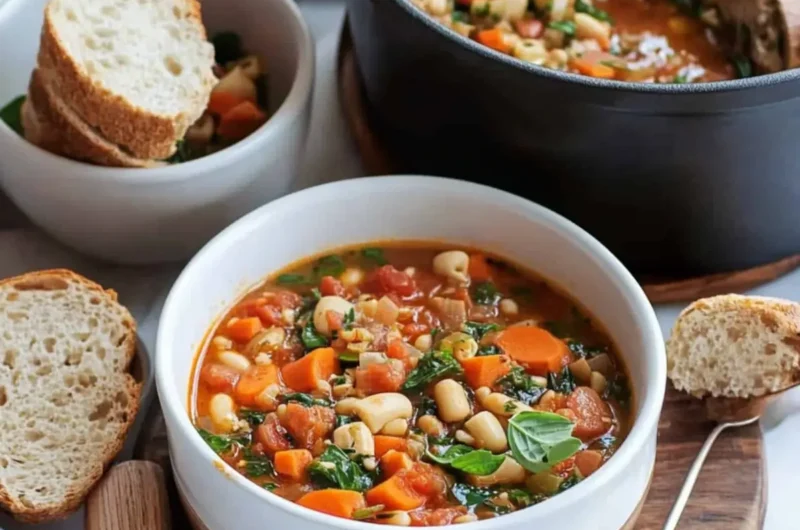
There’s a certain comfort that comes with a warm bowl of soup, and nothing embodies that feeling quite like a hearty vegetarian minestrone soup. As the seasons shift and the crisp air invites us to gather around the table, I find myself craving this vibrant dish, rich in fresh vegetables and fragrant spices. It’s the kind of recipe that whispers, “You don’t need anything fancy; just gather what you have on hand.”
When my pantry was running low and the days felt long, I decided to embrace the art of customization. With only a handful of ingredients, I created a nourishing bowl of minestrone that not only chased away the chill but also made my taste buds dance. This soup is more than just a meal; it’s an invitation to play with seasonal flavors, whether you’re in the mood for crisp green beans or sweet, tender carrots. Join me in crafting this classic Italian delight that’s as easy to make as it is delightful to savor!

Why is Minestrone Soup a Must-Try?
Comforting Warmth: This minestrone soup is like a hug in a bowl, providing a warm refuge on chilly days.
Endless Customization: Use whatever fresh vegetables you have on hand, embracing seasonal changes effortlessly.
Nutrient-Rich: Packed with legumes and veggies, this dish nourishes your body with essential vitamins.
Simplicity: With straightforward steps, it’s perfect for both novice cooks and seasoned chefs alike.
Crowd-Pleaser: Ideal for gatherings, everyone can find joy in this hearty, flavorful soup!
Make Ahead: It stores well, so you can happily enjoy leftovers throughout the week!
Minestrone Soup Ingredients
• Discover the essential components for a perfect minestrone soup!
For the Base
- Extra-Virgin Olive Oil – Adds richness and depth of flavor to the soup.
- Medium Yellow Onion – Forms the flavorful foundation; dice for even cooking.
- Medium Carrots – Offers sweetness and crunch; swap for parsnips for a unique twist.
- Celery Ribs – Introduces aromatic notes; slice thinly for quicker cooking.
- Sea Salt – Elevates the overall dish; adjust to your taste preferences.
- Freshly Ground Black Pepper – Provides warmth and subtle heat.
- Garlic Cloves – Infuses the soup with aroma; grate for quick integration.
For the Hearty Elements
- Diced Tomatoes (28-ounce can) – Contributes acidity and forms the soup’s base; use fresh if in season.
- Cooked White or Kidney Beans (1½ cups) – Adds protein and substance; chickpeas are a great alternative.
- Chopped Green Beans (1 cup) – Enhances texture and color; can substitute with zucchini or asparagus.
- Vegetable Broth (4 cups) – Works as the main liquid base; opt for homemade or store-bought.
- Bay Leaves (2) – Infuses a lovely earthy flavor; remember to remove before serving.
For Seasoning and Pasta
- Dried Oregano (1 teaspoon) and Thyme (1 teaspoon) – Lends herbal notes; fresh can amplify the flavor.
- Small Pasta (¾ cup, e.g., elbows, shells, orecchiette) – Offers texture; use rice for a gluten-free version.
- Chopped Fresh Parsley (½ cup) – Brings freshness; basil or cilantro can be delightful substitutes.
- Red Pepper Flakes – Optional for an extra kick of heat when serving.
- Grated Parmesan Cheese – An optional garnish for non-vegans; consider vegan pesto as an alternative.
How to Make Minestrone Soup
- Heat oil: In a large pot, warm the extra-virgin olive oil over medium heat. This should take about 1-2 minutes, until fragrant and ready for the vegetables.
- Sauté vegetables: Add the diced onion, carrots, celery, sea salt, and freshly ground black pepper. Cook for 8 minutes, stirring occasionally, until the onions are translucent and the veggies have softened.
- Add aromatics: Stir in the grated garlic, diced tomatoes, cooked beans, chopped green beans, vegetable broth, bay leaves, oregano, and thyme. Cover the pot and let it simmer for 20 minutes, allowing all the flavors to meld together beautifully.
- Cook pasta: Add the small pasta to the pot and cook uncovered for an additional 10 minutes, or until the pasta is tender and well incorporated into the soup.
- Season and serve: Taste the minestrone soup and adjust the seasoning to your liking. Serve hot, garnished with chopped parsley, a sprinkle of red pepper flakes, and grated Parmesan cheese if desired.
Optional: Serve with a slice of crusty bread for a delightful combination.
Exact quantities are listed in the recipe card below.

What to Serve with Minestrone Soup?
Cozy up your dining experience with delightful pairings that enhance the warmth and comfort of this vibrant soup.
-
Crusty Bread: The perfect companion, its hearty texture soaks up the rich broth beautifully. A slice with a spread of butter or olive oil elevates each bite.
-
Fresh Arugula Salad: A crisp contrast to the warmth of the soup, this peppery salad adds a refreshing note. Toss with lemon juice and olive oil for a zesty kick.
-
Garlic Breadsticks: Golden and aromatic, these crunchy delights bring indulgence to your table. The warm garlic butter flavor complements the soup perfectly.
-
Parmesan Crisps: These salty, cheesy bites not only add texture but also a delightful savory touch. They are perfect for snacking between spoonfuls of minestrone.
-
Roasted Vegetables: Toss seasonal veggies with olive oil and herbs, then roast until caramelized. Their sweetness harmonizes beautifully with the hearty flavors of the soup.
-
White Wine: A chilled glass of Pinot Grigio or Sauvignon Blanc can enhance your meal. The crisp acidity cuts through the richness of the soup, offering a delightful balance.
-
Dessert: End your meal with a light lemon sorbet. Its refreshing taste cleanses the palate and leaves everyone feeling satisfied but not heavy.
Transform your minestrone soup into a full-fledged culinary experience with these thoughtful pairings!
Minestrone Soup Variations
There’s so much joy to be found in personalizing this recipe to fit your tastes and what’s available in your kitchen!
-
Plant-Based Protein: Swap white beans with cooked lentils or chickpeas for a hearty twist. Each legume brings its own unique texture and flavor profile to the soup.
-
Seasonal Vegetables: Add in butternut squash or seasonal greens like kale for vibrant colors and added nutrition. Embrace the flavors of each season!
-
Grain Alternatives: Replace small pasta with quinoa or farro for a nutty flavor and chewy texture. This not only enhances the dish but also makes it gluten-free for those who need it.
-
Herb Infusion: Introduce fresh herbs like basil, rosemary, or thyme at the end of cooking to brighten the overall flavor. These additions can transform your soup with a lovely aroma.
-
Spice it Up: For a kick, add a dash of smoked paprika, or even a splash of hot sauce to elevate your minestrone with a spicy richness. This little tweak makes each bowl sing.
-
Umami Boost: Stir in a tablespoon of soy sauce or miso paste while simmering for an extra depth of savory flavor. This delicious enhancement will make your soup incredibly hearty.
-
Creamy Comfort: To make the soup silkier, blend a portion of it until smooth before serving. The creamy consistency is comforting and reminiscent of traditional Italian cooking.
-
Nutty Finish: Top with toasted pine nuts or a sprinkle of nutritional yeast to elevate the dish with a delightful crunch and a cheese-like taste, perfect for a vegan option.
Expert Tips for Minestrone Soup
- Customize Ingredients: Use seasonal vegetables in your minestrone soup for the freshest flavor. Don’t hesitate to swap in whatever you have on hand!
- Watch the Pasta: To maintain texture, cook pasta separately if storing leftovers. It prevents it from becoming mushy after sitting in the broth.
- Taste as You Go: Begin with less salt and pepper, adjusting gradually. The soup’s flavor will develop as it simmers, so taste frequently!
- Boost Nutrients: Consider adding leafy greens like spinach or kale in the last few minutes of cooking for extra vitamins and color.
- Store Smartly: Keep the soup in an airtight container for up to four days. If possible, store the pasta separately to maintain its texture when reheating.
How to Store and Freeze Minestrone Soup
Room Temperature: Allow the minestrone soup to cool completely before storing it at room temperature for no more than 2 hours to ensure food safety.
Fridge: Store your minestrone soup in an airtight container in the refrigerator for up to 4 days. If possible, keep the pasta separate to maintain its texture.
Freezer: Freeze minestrone soup for up to 3 months in an airtight container or freezer-safe bag. Ensure to leave some space for expansion as the soup freezes.
Reheating: To reheat, thaw overnight in the fridge if frozen, then warm on the stovetop over medium heat, adding a bit of water or broth if needed to loosen the soup.
Make Ahead Options
These minestrone soup components are perfect for meal prep enthusiasts! You can chop all the vegetables and store them in an airtight container in the refrigerator up to 3 days ahead to save time on busy evenings. Additionally, you can cook the beans and the vegetable broth mixture up to 24 hours in advance. When ready to enjoy, simply combine the prepped ingredients in a pot, bring to a simmer, and add the small pasta, cooking until tender. To maintain the quality of your soup, avoid adding pasta until you’re ready to serve, as it can absorb too much liquid during storage. You’ll enjoy a heartwarming, homemade meal that’s just as delicious with minimal effort!

Hearty Vegetarian Minestrone Soup Recipe FAQs
What type of vegetables should I use in my minestrone soup?
Absolutely! The beauty of minestrone soup lies in its customization. Use whatever seasonal vegetables you have on hand. Typical choices include carrots, green beans, and zucchini. You can also try integrating leafy greens like kale or spinach for added nutrition.
How long can I store minestrone soup in the fridge?
The minestrone soup keeps beautifully in the fridge for up to 4 days. I recommend storing it in an airtight container to protect its flavor and freshness! If you’ve added pasta, consider keeping it separate to avoid it becoming too mushy.
Can I freeze minestrone soup? If so, how?
Yes, you can freeze minestrone soup for up to 3 months! When freezing, make sure to let it cool completely, then transfer it to an airtight container or a freezer-safe bag (leave a little room at the top for expansion). When ready to enjoy, thaw it overnight in the fridge, then reheat on the stovetop – just add a splash of water or broth to adjust the consistency if needed.
What if my soup is too thick?
Very good question! If your minestrone soup turns out thicker than you’d like, simply add more vegetable broth or water to it as it simmers. I often do this when I’m reheating leftovers. Stir it well and let it warm up on low heat until it reaches your preferred consistency.
Can I make this soup gluten-free?
Absolutely! To make a gluten-free version of minestrone soup, simply omit the pasta and substitute it with additional beans or lentils for protein. You can also use gluten-free pasta, which is widely available, or rice as another alternative. Just keep an eye on the cooking times, as they may vary!
Is this minestrone soup safe for my dog?
While some ingredients in minestrone soup are safe for dogs, like carrots and green beans, avoid giving them any broth that contains onion, garlic, or spices. If you want to share a little with your furry friend, consider setting aside a plain portion before adding these ingredients. Always consult your vet if you’re uncertain about new foods!
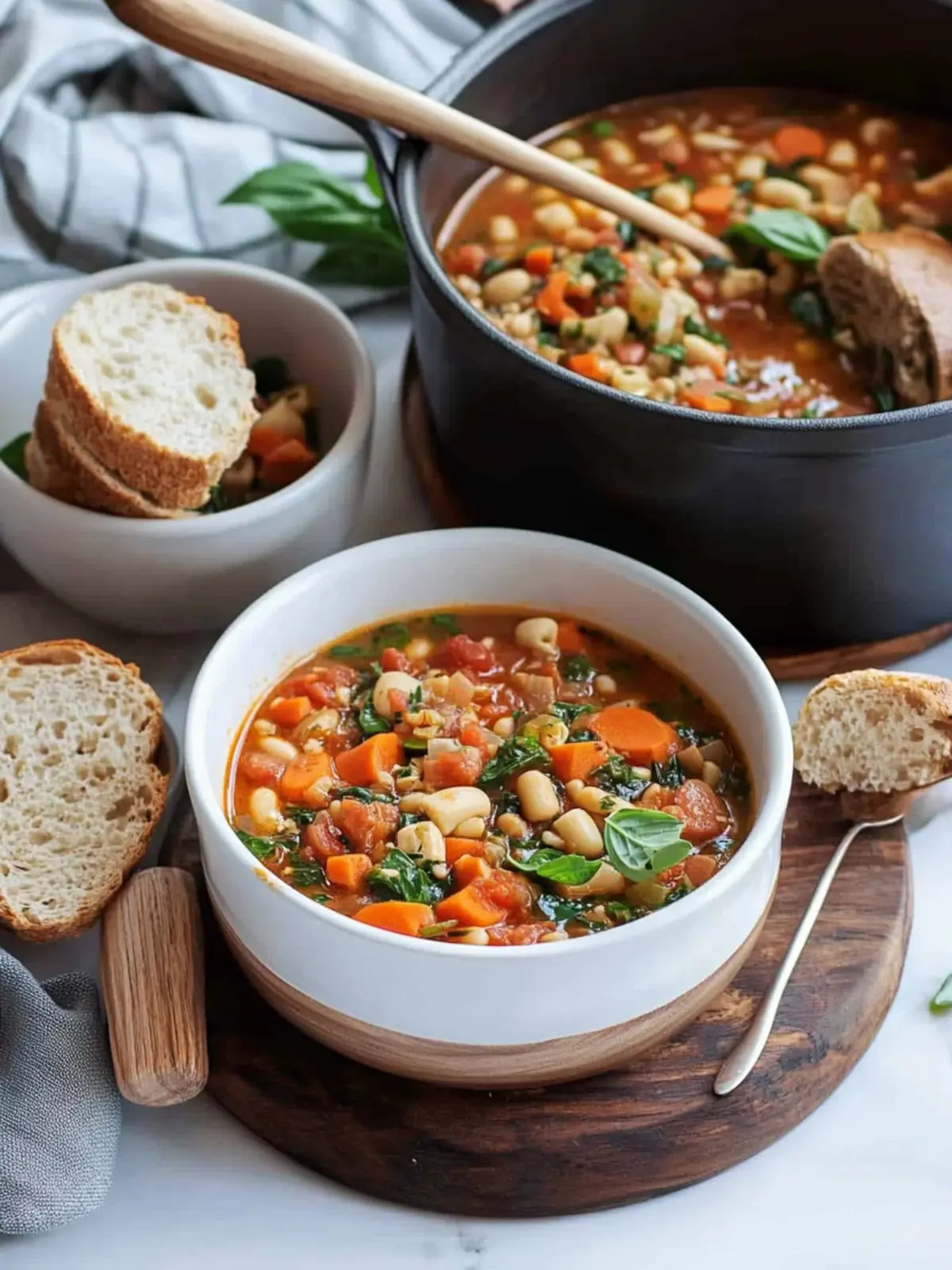
Hearty Minestrone Soup Bursting with Fresh Seasonal Flavor
Ingredients
Equipment
Method
- In a large pot, warm the extra-virgin olive oil over medium heat. This should take about 1-2 minutes, until fragrant and ready for the vegetables.
- Add the diced onion, carrots, celery, sea salt, and freshly ground black pepper. Cook for 8 minutes, stirring occasionally, until the onions are translucent and the veggies have softened.
- Stir in the grated garlic, diced tomatoes, cooked beans, chopped green beans, vegetable broth, bay leaves, oregano, and thyme. Cover the pot and let it simmer for 20 minutes, allowing all the flavors to meld together beautifully.
- Add the small pasta to the pot and cook uncovered for an additional 10 minutes, or until the pasta is tender and well incorporated into the soup.
- Taste the minestrone soup and adjust the seasoning to your liking. Serve hot, garnished with chopped parsley, a sprinkle of red pepper flakes, and grated Parmesan cheese if desired.