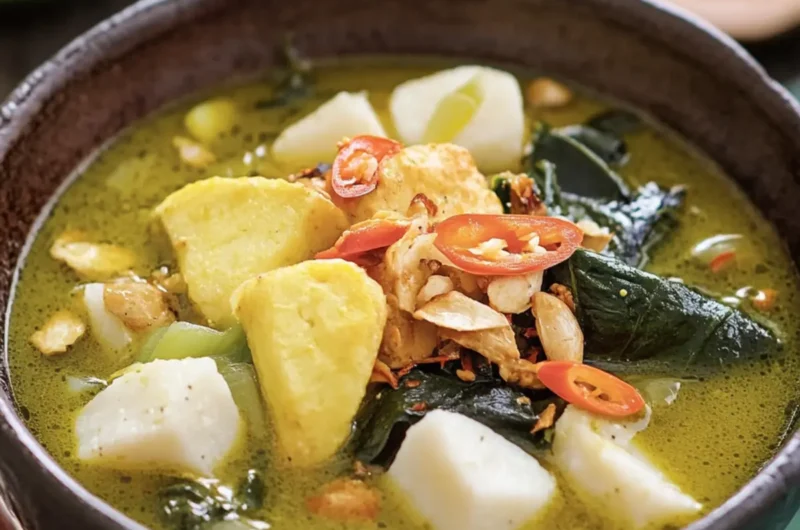
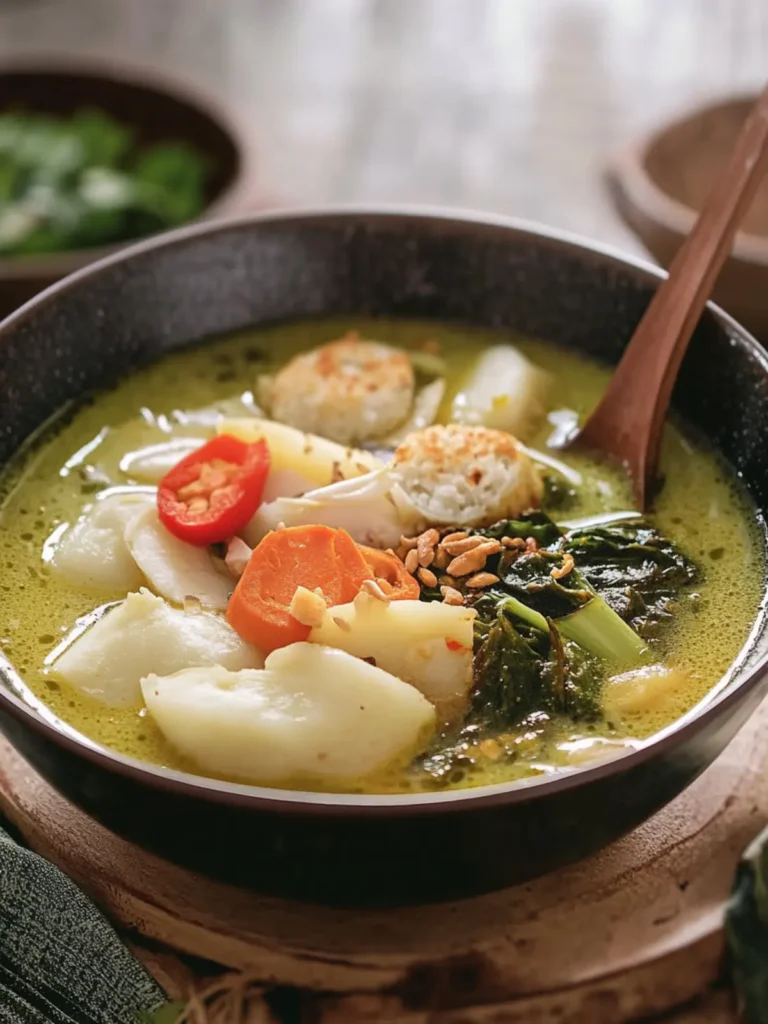
The first time I savored a bowl of Lontong Sayur, I felt like I was transported to a bustling Indonesian market filled with vibrant aromas. The blend of coconut milk, spices, and tender vegetables creates a warm embrace that’ll liven up any breakfast, especially when the mornings feel rushed or chilly. Picture this: firm rice cakes soaking in a coconut-based curry, perfectly seasoned with the citrusy zing of lemongrass and the earthy depth of galangal. It’s a dish that dances between comforting and exotic, inviting creativity with every bowl as you can tweak it with seasonal veggies.
Whether you’re celebrating a festive occasion or simply craving a rich, hearty meal, Lontong Sayur delivers layers of flavor and texture that make it a satisfying choice for anyone seeking a delightful alternative to fast food. Let’s dive into this authentic recipe and bring the heart of Indonesia to your kitchen!
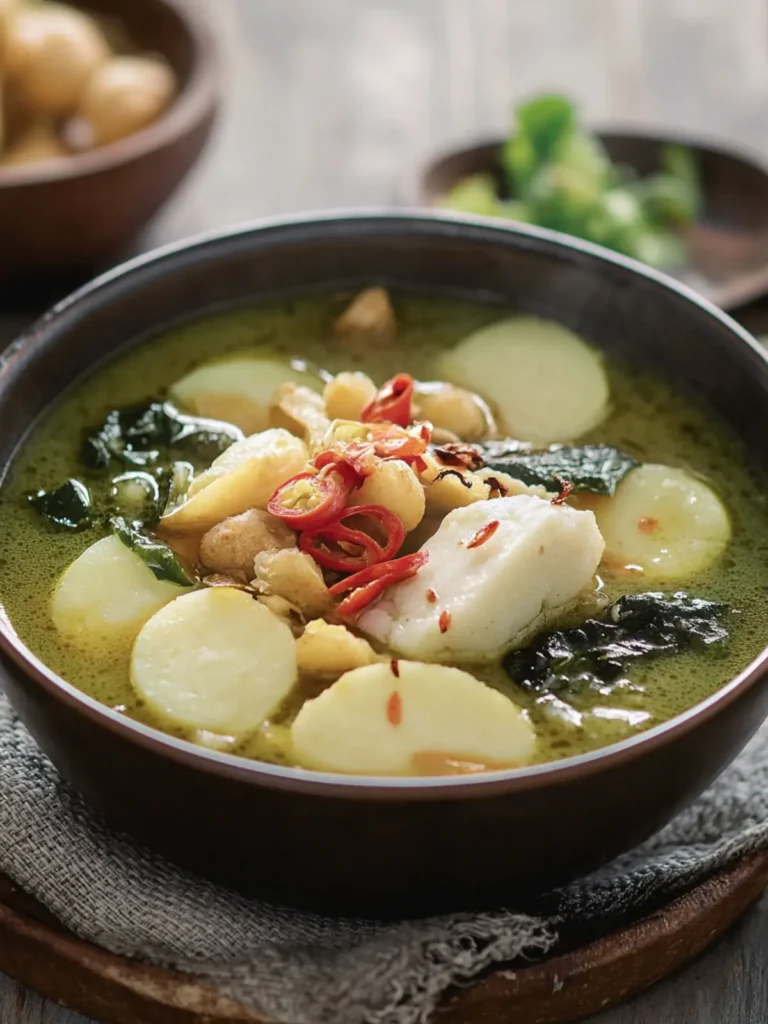
Why is Indonesian Lontong Sayur so special?
Comforting warmth: This coconut-based curry wraps you in a cozy hug, perfect for any morning!
Customizable goodness: Easily switch up vegetables to suit your taste or what’s in season.
Quick prep: Though it may seem elaborate, the step-by-step process helps you manage time efficiently.
Flavor explosion: The blend of fresh herbs and spices brings a symphony of flavors to your table.
Cultural richness: This dish connects you to Indonesian traditions, making every bite a small celebration.
For more ways to enjoy it, check out our variations for an exciting twist on this classic!
Indonesian Lontong Sayur Ingredients
For the Rice Cakes
• Jasmine Rice – Provides the base for the rice cakes; try glutinous rice for a chewier texture.
• Banana Leaves – Used for wrapping the rice; substitute with heatproof plastic wrap if needed.
For the Curry
• Coconut Milk – Adds creaminess and richness to the broth; opt for low-fat for a lighter option.
• Water – Balances the coconut milk; adjust for your desired soup thickness.
• Young Jackfruit or Green Beans – Offers nutrition and texture; feel free to swap for any seasonal vegetables.
• Cabbage – Provides crunch and fiber; spinach or bok choy work well as alternatives.
Aromatics and Spices
• Lemongrass – Brings a fresh, citrusy flavor; dried lemongrass can be used if fresh isn’t available.
• Kaffir Lime Leaves – Adds a unique aromatic note; regular lime leaves can be a substitute.
• Salam Leaves – Traditional Indonesian bay leaves; replace with regular bay leaves if needed.
• Palm Sugar – Sweetness that balances the spices; brown sugar can be used for similar sweetness.
• Tamarind Water – Introduces tanginess; you can use lemon juice as an alternative.
For the Spice Paste
• Cooking Oil – Used for sautéing the spice paste; vegetable oil or any neutral oil works great.
• Shallots and Garlic – Essential for the paste’s flavor base; yellow onions can substitute for shallots.
• Red Chillies – For a kick of heat; deseed them for a milder flavor.
• Candlenuts or Macadamia Nuts – Thicken the paste; cashews can easily replace them if necessary.
• Ground Coriander – Provides earthy aroma; you can omit it if you don’t have any available.
• Fresh Turmeric or Powder – Adds vibrant color; use turmeric powder if fresh is not on hand.
• Galangal – Offers a distinct flavor; substitute ginger if needed, though the taste will be different.
Elevate your cooking with this traditional recipe for Indonesian Lontong Sayur, and create a dish that’s not just delicious but also a joy to prepare!
How to Make Indonesian Lontong Sayur
-
Prepare Lontong: Line a dish with banana leaves and pack rinsed jasmine rice tightly into cylinders. Steam for 1.5 to 2 hours until the rice is firm and slightly translucent. Cool the lontong, then slice into rounds.
-
Make Spice Paste: In a blender, combine shallots, garlic, chillies, candlenuts, ground coriander, turmeric, and galangal. Blend until smooth, adding small amounts of water as needed for consistency.
-
Sauté Paste: Heat cooking oil in a pot over medium heat, then add the spice paste. Sauté for 4-5 minutes until fragrant and the liquid has separated from the paste.
-
Combine Aromatics: Toss in the bruised lemongrass, kaffir lime leaves, and salam leaves, cooking for another minute until the aromatics release their oils.
-
Cook Broth: Pour in the coconut milk and water, bringing it to a gentle boil. Add the young jackfruit or green beans and cabbage, letting it simmer for 15-20 minutes until the vegetables are tender.
-
Season: Stir in palm sugar, tamarind water, and salt, adjusting to taste. Allow the mixture to simmer for an additional 5 minutes for flavors to meld.
-
Serve: Slice the lontong into rounds, arrange them in serving bowls, and ladle the hot curry over the rice cakes. Garnish with boiled eggs or sambal for an extra kick!
Optional: Top each bowl with a sprinkle of fried shallots for crunch and flavor.
Exact quantities are listed in the recipe card below.
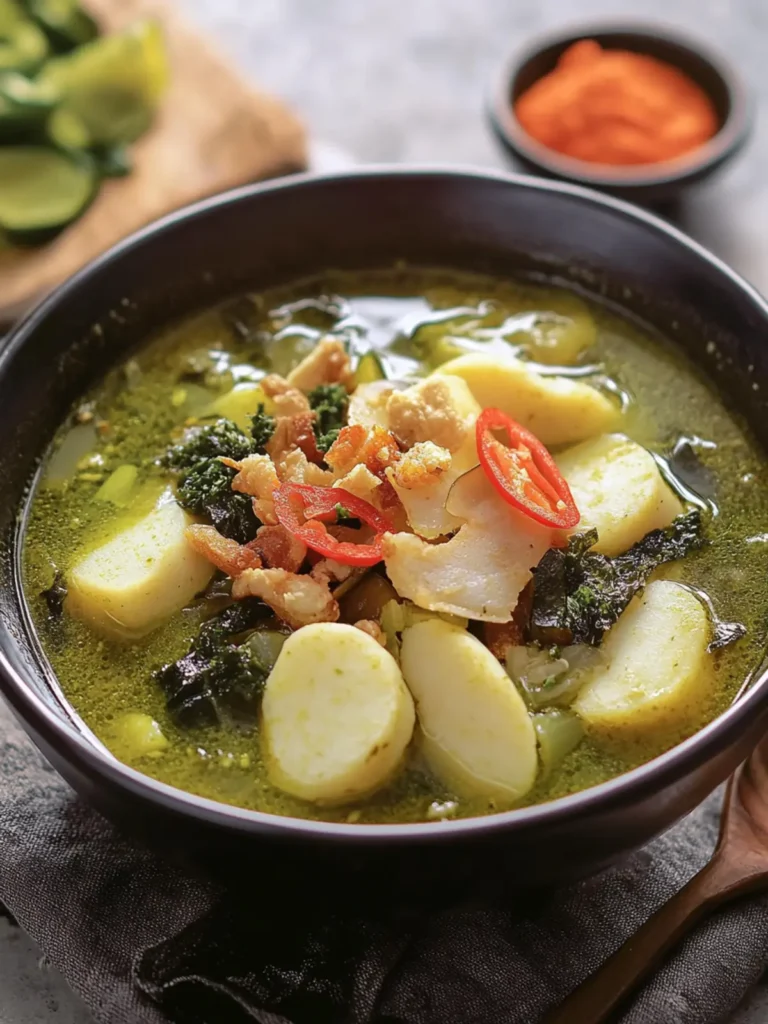
What to Serve with Indonesian Lontong Sayur?
Creating a meal around this fragrant coconut curry will surely elevate your dining experience.
- Boiled Eggs: Adding sliced boiled eggs enhances the meal’s protein content, and their creaminess complements the rich curry beautifully.
- Fried Shallots: A sprinkle of crispy fried shallots brings a delightful crunch and aromatic contrast to your Lontong Sayur. They add that perfect savory touch!
- Sambal: A side of sambal provides an exciting kick, allowing you to customize the heat level to your liking for a fiery enhancement.
- Cucumber Salad: A refreshing cucumber salad balances the comforting flavors, providing a crisp and cooling texture to the warm curry.
- Steamed Jasmine Rice: While Lontong offers a unique texture, fluffy jasmine rice serves as a neutral partner, soaking up the delicious broth perfectly.
- Fruit Iced Tea: A glass of fruit iced tea pairs beautifully, as its sweetness offsets the savory curry, creating a delightful harmony of flavors.
- Banana Chips: Crunchy banana chips introduce a playful texture alongside your meal; their slight sweetness complements the spicy notes of the curry.
- Turmeric Quinoa: For a wholesome twist, serve your Lontong Sayur with turmeric quinoa, which mirrors the curry’s earthiness and vibrant color.
Each of these options enhances the experience, making your Lontong Sayur even more enjoyable!
Storage Tips for Indonesian Lontong Sayur
Fridge: Store leftover Lontong Sayur in an airtight container for up to 3 days. Reheat gently on the stove or in the microwave until hot, adding a splash of water if needed.
Freezer: Freeze the curry and rice cakes separately for best texture. Lontong can be frozen for up to 2 months, while the curry can last around 3 months. Thaw overnight in the fridge before reheating.
Reheating: When reheating, ensure the curry is hot throughout. Simmer on low heat, stirring occasionally, until warmed through. Avoid boiling, which can affect the consistency.
Make-Ahead: Prepare the curry in advance and store in the fridge; it develops deeper flavors overnight, making your Indonesian Lontong Sayur even tastier!
Indonesian Lontong Sayur Variations
Feel free to let your creativity shine by customizing this comforting dish to suit your tastes and pantry!
- Vegetable Swap: Replace young jackfruit with seasonal veggies like bell peppers, zucchini, or snap peas for a fresh twist.
- Creamier Curry: Use full-fat coconut milk for a richer flavor, or mix in some heavy cream for an extra indulgence.
- Protein Boost: Add fried tofu or boiled eggs for a protein-rich, hearty meal that elevates the whole dish.
- Spice Up: Experiment with different types of chillies or add fresh ginger for an additional kick and aromatic depth.
- Herb Infusion: Try fresh basil or cilantro for a fragrant lift that complements the curry beautifully.
- Nutty Crunch: Substitute candlenuts with roasted peanuts for a delightful crunchy texture and unique taste.
- Citrus Brightness: A splash of lime juice just before serving can brighten the flavors and add refreshing acidity.
- Fiber Upgrade: Throw in some spinach or kale toward the end of cooking for an extra serving of veggies and nutrition.
Make Ahead Options
Indonesian Lontong Sayur is a fantastic dish to prepare in advance, perfect for busy cooks looking to save time during hectic mornings! You can make the lontong (rice cakes) up to 24 hours ahead by steaming them, cooling, and storing them in the refrigerator. The curry can also be prepared 3 days ahead; just cook it fully and store in an airtight container in the fridge. When you’re ready to serve, simply reheat the curry on the stove and microwave the lontong for quick convenience. This way, you’ll enjoy the same rich flavors and comforting textures without any stress, making meal prep a breeze!
Expert Tips for Indonesian Lontong Sayur
-
Tightly Packed Rice: Ensure the rice for lontong is tightly packed when wrapping in banana leaves to maintain its shape.
-
Watch the Paste: Keep a close eye on the spice paste while sautéing to prevent burning, which can negatively impact the flavor of the dish.
-
Adjust Spice Level: Control the amount of red chillies to adjust the heat level in your Indonesian Lontong Sayur, ensuring it suits your taste preferences.
-
Simmer on Low: Allow the curry to simmer on low heat for better flavor infusion, but be cautious not to overcook the vegetables for optimal texture.
-
Try Seasonal Veggies: Feel free to incorporate seasonal vegetables into your curry for a fresh twist and extra nutrition.
Indonesian Lontong Sayur Recipe FAQs
How do I choose ripe bananas for wrapping the rice cakes?
Absolutely! When selecting banana leaves, look for leaves that are vibrant green, intact, and flexible without any dark spots or signs of decay. Fresh leaves will provide the best flavor and texture for your lontong.
What is the best way to store leftover Lontong Sayur?
Store your leftover Indonesian Lontong Sayur in an airtight container in the refrigerator for up to 3 days. For best results, reheat gently on the stove or in the microwave until hot, and add a splash of water if the curry thickens.
Can I freeze Lontong Sayur? How?
Very! To freeze Indonesian Lontong Sayur, store the rice cakes and curry separately. The lontong can be frozen for up to 2 months, while the curry lasts around 3 months in the freezer. Just thaw everything overnight in the fridge before reheating. When you’re ready to enjoy, simmer the curry on low heat until it’s hot throughout, stirring occasionally to maintain consistency.
What if my spice paste is too thick?
No worries at all! If your spice paste is too thick, simply add a bit of water, one tablespoon at a time, while blending until you achieve the desired consistency. This will help the flavors to meld together beautifully without compromising texture.
Can I modify the recipe to accommodate allergies?
Absolutely! If someone has a nut allergy, you can skip the candlenuts or macadamia nuts and simply thicken the paste with a bit more rice or a starch. For those allergic to specific vegetables, feel free to substitute them with other seasonal options like zucchini or carrots to keep the dish enjoyable for everyone.
How do I check if my vegetables are properly cooked?
For the best results, pay attention to the texture of your vegetables in the curry. They should be tender but still have a slight bite when you taste them. This usually takes about 15-20 minutes of simmering, ensuring a delightful mix of flavors and textures in your Indonesian Lontong Sayur.
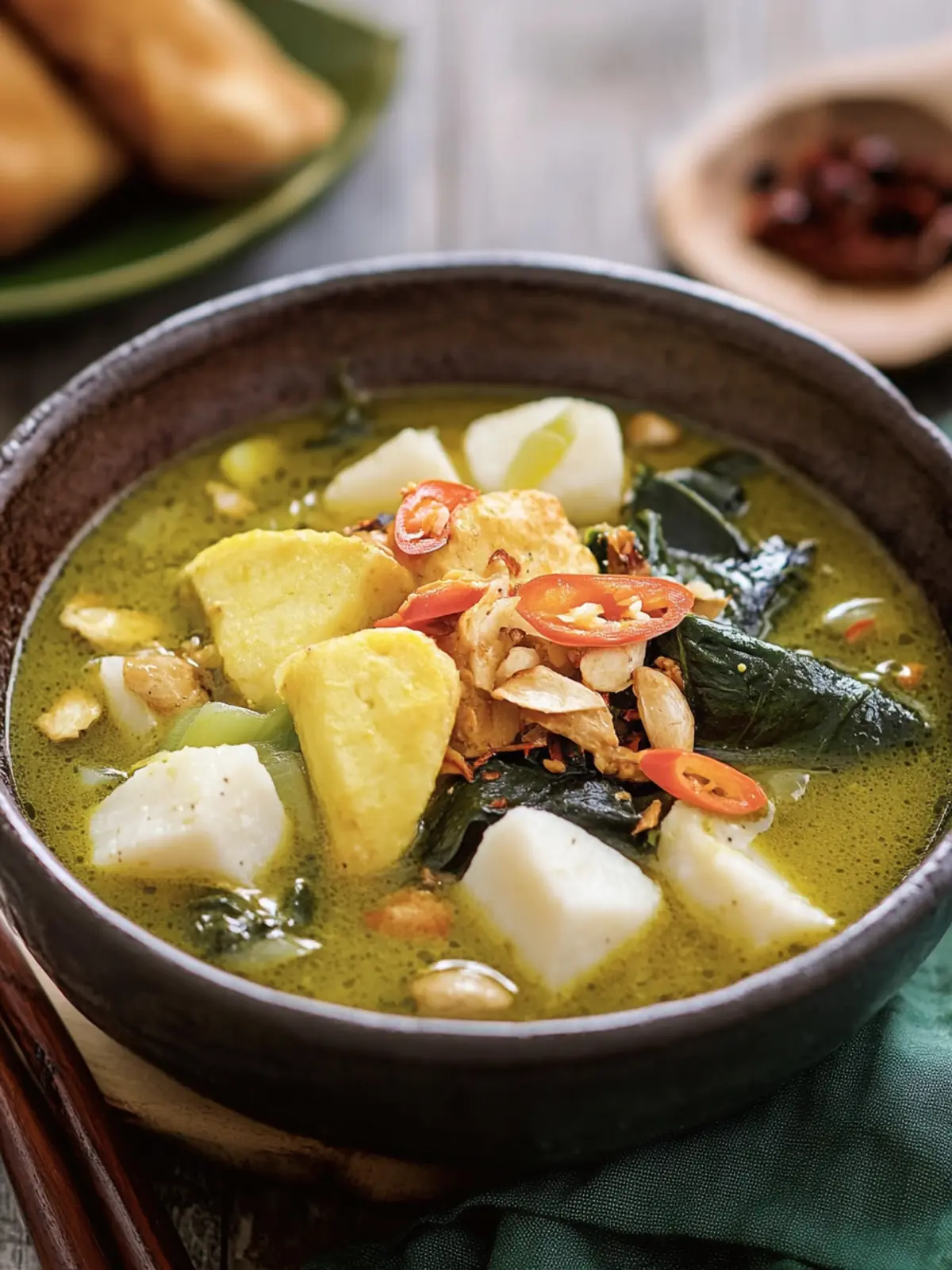
Indonesian Lontong Sayur: Delightful Vegetable Soup with Rice Cakes
Ingredients
Equipment
Method
- Prepare Lontong: Line a dish with banana leaves and pack rinsed jasmine rice tightly into cylinders. Steam for 1.5 to 2 hours until the rice is firm and slightly translucent. Cool the lontong, then slice into rounds.
- Make Spice Paste: In a blender, combine shallots, garlic, chillies, candlenuts, ground coriander, turmeric, and galangal. Blend until smooth, adding small amounts of water as needed for consistency.
- Sauté Paste: Heat cooking oil in a pot over medium heat, then add the spice paste. Sauté for 4-5 minutes until fragrant and the liquid has separated from the paste.
- Combine Aromatics: Toss in the bruised lemongrass, kaffir lime leaves, and salam leaves, cooking for another minute until the aromatics release their oils.
- Cook Broth: Pour in the coconut milk and water, bringing it to a gentle boil. Add the young jackfruit or green beans and cabbage, letting it simmer for 15-20 minutes until the vegetables are tender.
- Season: Stir in palm sugar, tamarind water, and salt, adjusting to taste. Allow the mixture to simmer for an additional 5 minutes for flavors to meld.
- Serve: Slice the lontong into rounds, arrange them in serving bowls, and ladle the hot curry over the rice cakes. Garnish with boiled eggs or sambal for an extra kick!