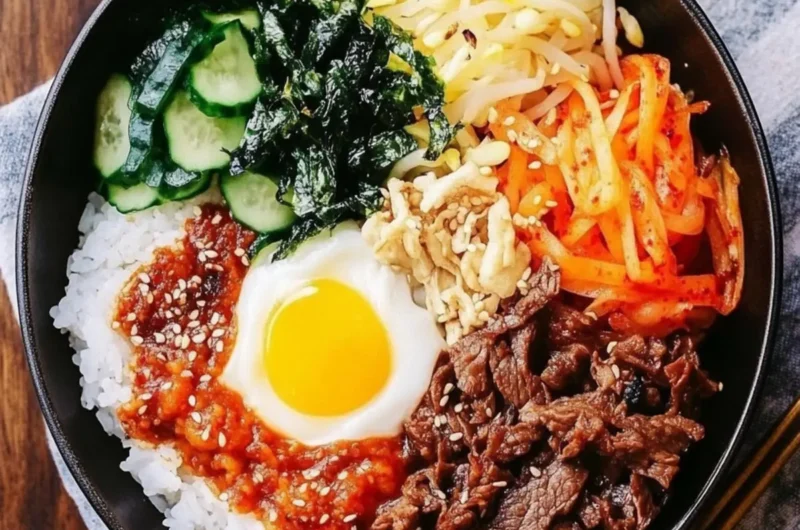
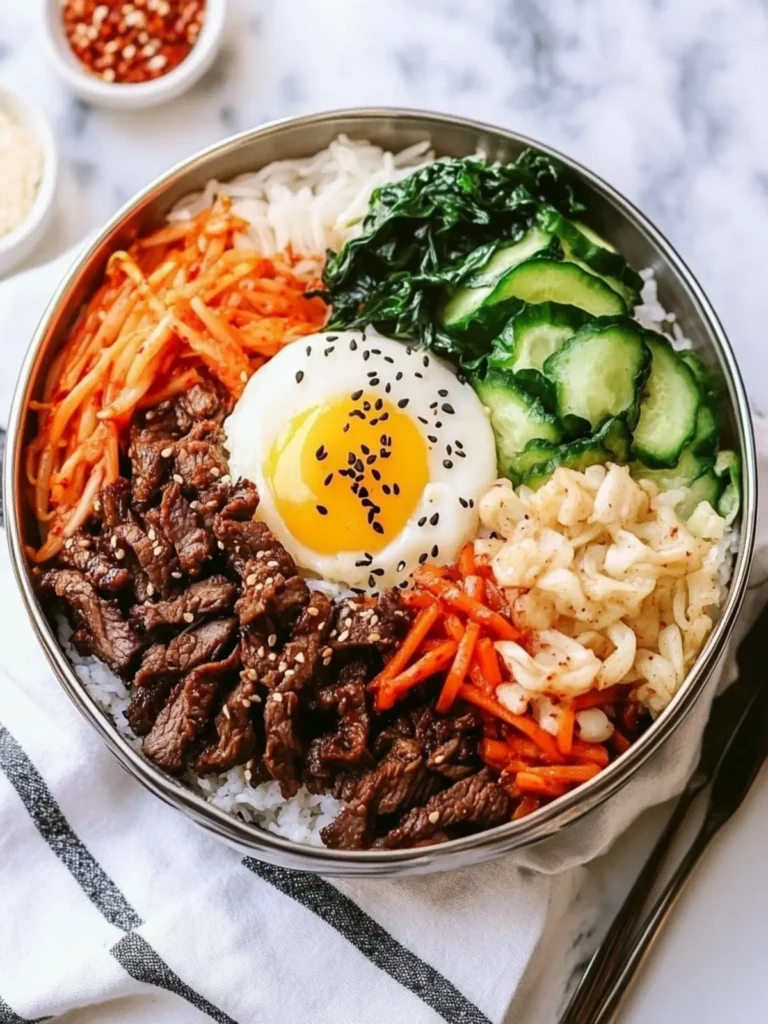
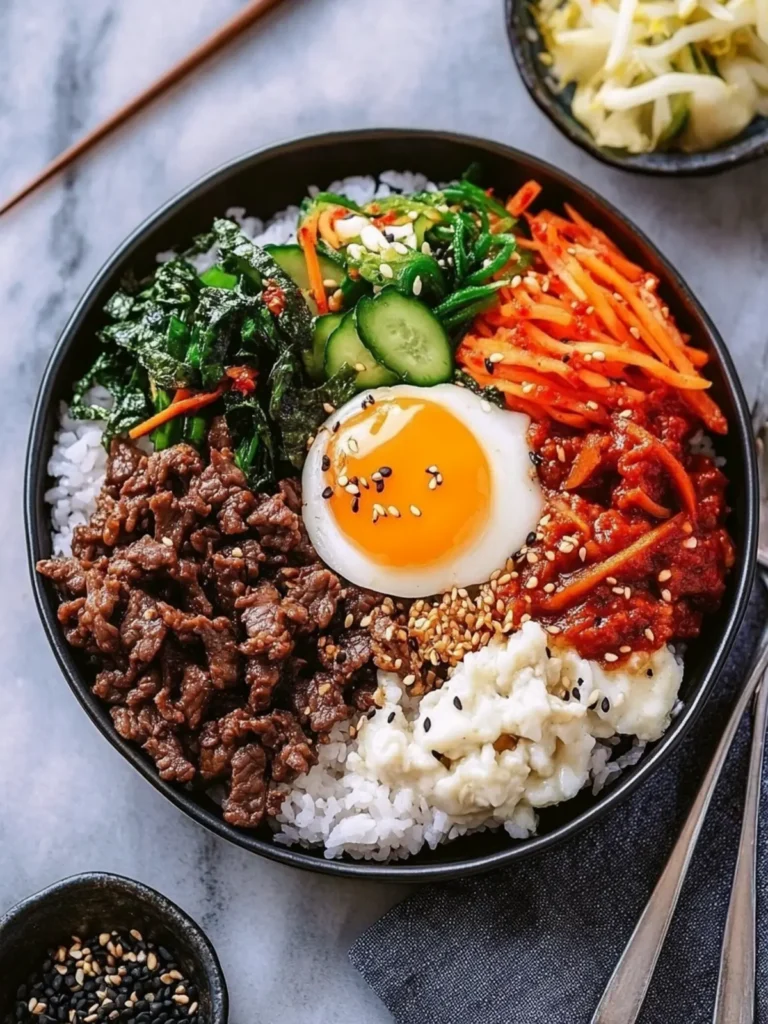
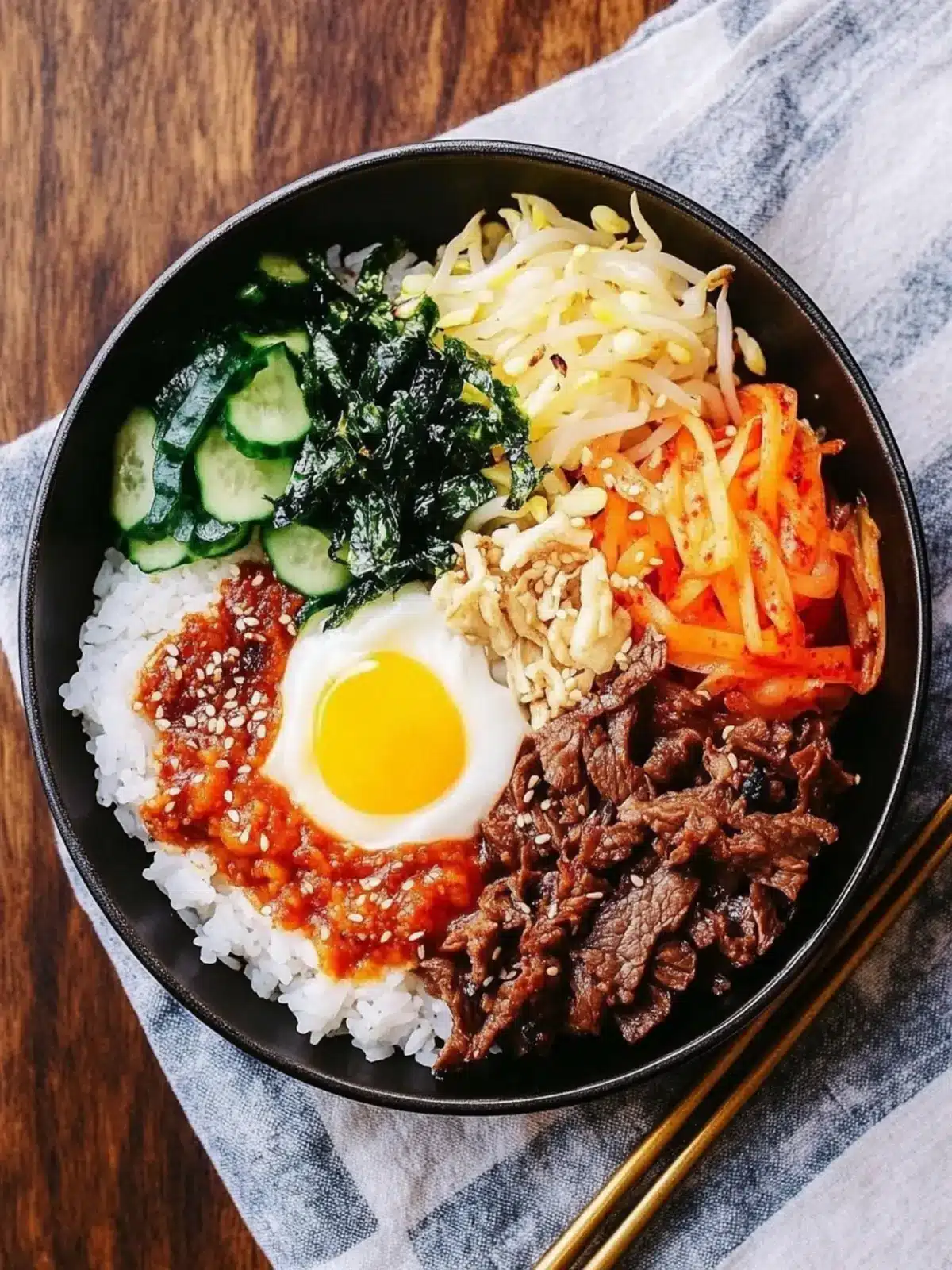
When the vibrant colors of fresh vegetables and savory beef come together, you know something special is on the horizon. This Easy Korean Beef Bibimbap is not just a meal; it’s an experience, a wonderful celebration of flavors and textures that will transform your weeknight dinners into a culinary adventure. Picture this: fluffy rice mingling with crisp mung bean sprouts, tender watercress, and perfectly seasoned ground beef, all topped with a beautifully runny sunny-side-up egg.
The harmony of each ingredient creates a dish that’s not only visually striking but also incredibly satisfying. Whether you’re exhausted after a long day or hosting a casual gathering with friends, Bibimbap offers a satisfying solution that’s easy to make and sure to impress. Let’s dive into the heart of Korean cuisine and whip up this crowd-pleasing delight that captures the essence of home-cooked comfort. Are you ready to stir your senses and bring a delicious burst of color to your table?
Why is Easy Korean Beef Bibimbap a Must-Try?
Vibrant Colors: The hues of fresh vegetables create an eye-catching plate that’s sure to impress anyone at the table.
Flavor Explosion: Each spoonful delivers a harmonious blend of savory beef, nutty sesame oil, and spicy gochujang for a truly unforgettable taste experience.
Quick and Easy: Perfect for busy weeknights, this dish can be whipped up in under 30 minutes with simple ingredients you likely have on hand.
Customizable Delight: With options for variations like tofu or seasonal veggies, it caters to many dietary preferences, making it a crowd-pleaser for any gathering.
Nutritionally Balanced: Packed with protein, vitamins, and healthy fats, this bibimbap delivers not just flavor, but also nourishment.
Explore the ingredients list to see how you can easily make this delightful dish at home!
Easy Korean Beef Bibimbap Ingredients
Create your own bowl of deliciousness with these key ingredients!
For the Base
- Medium Grain White Rice – Forms the heart of the meal, providing a fluffy texture that soaks up flavors well. You can swap it for brown rice for added fiber and a nuttier taste.
For the Vegetables
- Mung Bean Sprouts – Offers crunch and freshness; feel free to substitute with soy or radish sprouts if you prefer.
- Watercress or Spinach – Delivers a mild flavor and a lovely green color; spinach is a great alternative if watercress isn’t available.
- Carrot – Adds sweetness and vibrant color; zucchini or bell pepper can work beautifully if you want a twist!
For the Beef
- Ground Beef – A rich protein source that brings in savory depth; ground chicken or turkey is a lighter alternative if desired.
- Garlic – Boosts flavor immensely; you can omit it if you’re looking for a milder taste.
- Soy Sauce – Infuses umami goodness; use tamari for a gluten-free version without sacrificing flavor.
For Cooking
- Canola Oil – Ideal for stir-frying and a neutral flavor; feel free to replace with vegetable or peanut oil if that’s what you have.
- Sesame Oil – Adds a delightful nuttiness; substitute with olive oil if you’re allergic.
For the Topping
- Eggs – Creates richness and protein; cook them sunny-side up for that perfect runny yolk.
- Napa Cabbage Kimchi – Introduces a spicy kick and depth of flavor; it’s optional but definitely enhances authenticity!
- Gochujang (Korean Red Pepper Paste) – A must for heat and flavor; sriracha can be a close substitute in a pinch.
- Toasted Sesame Seeds – A beautiful garnish adding crunch and appeal; can be swapped with chopped nuts or omitted altogether.
Get ready to create this Easy Korean Beef Bibimbap Recipe that will delight your family and friends, transforming ordinary dinners into extraordinary experiences!
How to Make Easy Korean Beef Bibimbap
-
Cook rice: Start by preparing your medium grain white rice. Use a rice cooker or cook on the stovetop according to package instructions until fluffy and fully cooked. This will take about 15-20 minutes.
-
Blanch bean sprouts: Bring a pot of water to a boil. Add the mung bean sprouts and blanch for 5 minutes. Once done, use a colander to drain and cool them under cold running water.
-
Blanch watercress: In the same boiling water, quickly blanch the watercress (or spinach) for just 1 minute. Drain immediately and cool under cold water to keep the beautiful green color.
-
Season vegetables: In a bowl, toss the blanched mung bean sprouts and watercress with a pinch of salt, a drizzle of sesame oil, and minced garlic. This adds flavor and enhances freshness.
-
Stir-fry carrots: Heat a pan over medium-high heat with a bit of canola oil. Add the julienned carrots and stir-fry for about 1 minute until tender but still crisp. Set aside.
-
Brown ground beef: In the same skillet, add the ground beef. Cook over high heat, stirring occasionally, until browned (around 5-7 minutes). Pour in the soy sauce towards the end to flavor the beef.
-
Cook eggs: In a separate skillet, heat a little oil and crack the eggs. Cook them sunny-side up for about 3-4 minutes, ensuring the yolks remain runny for that delicious richness.
-
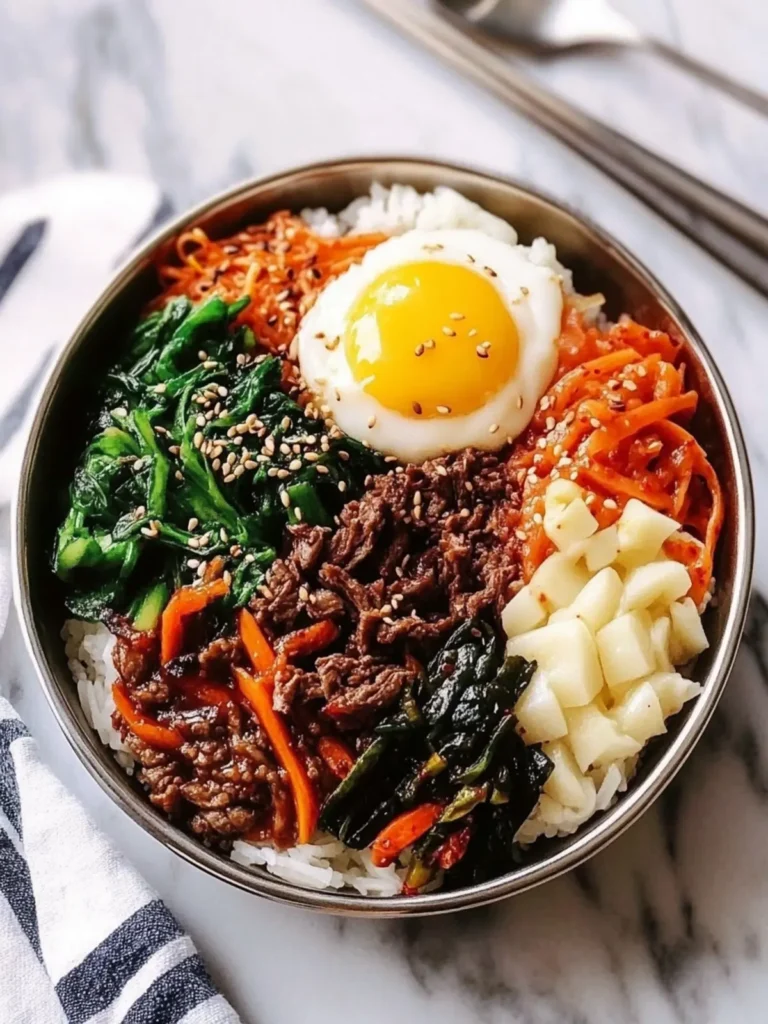
Assemble bibimbap: In a bowl, place a generous portion of rice at the bottom. Layer on the seasoned beef, blanched vegetables, kimchi (if using), and top with the sunny-side-up egg.
-
Finish and serve: Drizzle with gochujang for heat and sprinkle toasted sesame seeds on top before serving. Enjoy your colorful, vibrant meal!
Optional: Add extra gochujang on the side for those who enjoy a little more spice!
Exact quantities are listed in the recipe card below.
Make Ahead Options
These Easy Korean Beef Bibimbap bowls are perfect for meal prep enthusiasts looking to save time during busy weeknights! You can cook the rice and store it in the refrigerator for up to 3 days. Additionally, blanch and season the mung bean sprouts and watercress (or spinach) ahead of time to keep them fresh—just refrigerate them in airtight containers for up to 2 days. When you’re ready to assemble your bibimbap, simply reheat the rice and toppings, fry the eggs, and layer everything in bowls. This way, you’ll enjoy the same delicious flavors of your Easy Korean Beef Bibimbap without the last-minute rush!
Easy Korean Beef Bibimbap Variations
Feel free to put your unique spin on this delightful dish, enhancing its flavors and textures!
-
Vegetarian Delight: Swap out the ground beef for tofu or tempeh for a delicious and protein-rich vegetarian option. This ensures everyone at the table can enjoy.
-
Extra Umami: Add finely chopped scallions or sliced shiitake mushrooms to amp up the savory notes. Both additions bring a rich depth to the dish.
-
Hearty Greens: Mix in kale or bok choy instead of watercress for an extra boost of nutrients and flavor. These hearty greens are a fantastic alternative that hold up well during cooking.
-
Spice It Up: If you like a little extra heat, toss in some sliced jalapeños or a dash of chili flakes. This adds a delightful kick that spice lovers will appreciate.
-
Nutty Garnish: Instead of sesame seeds, use chopped peanuts or almonds for a crunchy texture twist. The nutty flavor pairs beautifully with the dish’s savory components.
-
Seasonal Veggies: Incorporate whatever vegetables are in season, such as asparagus or radishes, for a fresh twist. Each season brings something new to your bibimbap!
-
Citrus Zing: Drizzle a bit of fresh lime or lemon juice over the top before serving for a bright, zesty finish. This elevates the flavors and adds a refreshing layer.
-
Fermented Flavor: Experiment with kimchi variations or other fermented toppings like pickled daikon or sauerkraut for a tangy kick that complements the bibimbap beautifully.
How to Store and Freeze Easy Korean Beef Bibimbap
Fridge: Store leftover bibimbap in an airtight container for up to 3 days. Keep the components separate, especially the egg, for optimal taste and texture.
Freezer: For best results, freeze cooked rice and beef separately in airtight bags. They can last for up to 3 months; just reheat before assembling.
Reheating: When ready to enjoy, reheat each component in the microwave or on the stovetop until warmed through. For a fresher taste, add the previously blanched vegetables and egg just before serving.
Make-Ahead: Prepare individual ingredients in advance and assemble just before serving. This makes enjoying your Easy Korean Beef Bibimbap easy and straightforward!
Expert Tips for Easy Korean Beef Bibimbap
-
Prep Ahead: Cut your vegetables and cook the rice in advance. This will make assembling your Easy Korean Beef Bibimbap a breeze on busy nights.
-
Maintain Crunch: Blanching vegetables is key! Quickly cook them and rinse under cold water to lock in their color and crispness.
-
Sear the Beef: Ensure your skillet is hot before adding ground beef. This helps achieve that savory sear, enhancing flavor and texture.
-
Perfect Egg: Cook sunny-side-up eggs gently to keep the yolk runny. This richness ties the dish together beautifully.
-
Customize Wisely: Don’t hesitate to swap proteins or veggies. This Easy Korean Beef Bibimbap is versatile and can cater to various taste preferences!
What to Serve with Easy Korean Beef Bibimbap?
Create a complete and satisfying dining experience with these delightful pairings!
-
Crispy Kimbap: These sushi-like rolls filled with vegetables and rice complement the bibimbap beautifully, adding a fun finger-food element to your meal.
-
Spicy Korean Pickles: The tart crunch of pickled vegetables elevates the flavors of the bibimbap while providing a refreshing contrast to the dish’s warmth.
-
Savory Tofu Steaks: Grilled or stir-fried tofu adds a protein-rich, hearty twist. Its mild flavor allows the spices and sauces of the bibimbap to shine through.
-
Sesame Cucumber Salad: This cool, crunchy salad brings a refreshing brightness that balances the rich flavors of the bibimbap, making every bite even more enjoyable.
-
Kimchi Jjigae (Kimchi Stew): This warming stew offers a depth of flavor and heat that enhances your bibimbap experience, ideal for those craving a cozy, comforting meal.
-
Chilled Soju: A glass of this smooth Korean spirit makes for a delightful pairing, cutting through the richness of the bibimbap with its crisp finish.
-
Matcha Green Tea Cheesecake: For dessert, this light and creamy cake infuses a touch of traditional Japanese flavor, providing a sweet and savory finish to your Korean feast.
Easy Korean Beef Bibimbap Recipe FAQs
What type of rice is best for bibimbap?
I recommend using medium grain white rice for the best texture, as it allows the flavors to meld beautifully. If you’re looking for a healthier option, brown rice will provide added fiber and a nuttier taste.
How should I store leftovers?
Store any leftover bibimbap in an airtight container in the fridge for up to 3 days. I suggest keeping the components separate to maintain their individual flavors and textures, especially the runny egg, which is best enjoyed fresh!
Can I freeze bibimbap components?
Absolutely! For freezing, I recommend separating the cooked rice and ground beef into airtight containers. They can last for up to 3 months! Just be sure to reheat them thoroughly before assembling your bibimbap. Add the previously blanched vegetables and sunny-side-up egg just before serving to keep everything fresh.
What if my vegetables turn soggy?
To avoid soggy vegetables, make sure to blanch them for just the right amount of time, usually no more than 5 minutes for firmer sprouts. Also, don’t forget to rinse them under cold water right after blanching—it helps lock in the crunch and vibrant color!
Are there any dietary concerns I should be aware of?
Yes! If you have allergies, be cautious with ingredients like sesame oil and soy sauce, as they contain common allergens. For gluten-free options, use tamari instead of regular soy sauce and feel free to substitute proteins such as tofu for a plant-based alternative.
Can I make bibimbap vegetarian?
Very much so! Swap out the ground beef for tofu or tempeh, and feel free to add more seasonal vegetables like zucchini or bell peppers. This Easy Korean Beef Bibimbap is versatile and can cater to various dietary preferences while still being delicious!
Easy Korean Beef Bibimbap Recipe – Vibrant Flavor in a Bowl
Ingredients
Equipment
Method
- Cook rice: Start by preparing your medium grain white rice according to package instructions until fluffy and fully cooked (about 15-20 minutes).
- Blanch bean sprouts: Bring a pot of water to a boil. Add mung bean sprouts and blanch for 5 minutes, then drain and cool under cold running water.
- Blanch watercress: In the same boiling water, quickly blanch watercress (or spinach) for 1 minute. Drain immediately and cool under cold water.
- Season vegetables: Toss blanched mung bean sprouts and watercress with a pinch of salt, sesame oil, and minced garlic in a bowl.
- Stir-fry carrots: Heat a pan over medium-high heat with canola oil. Add julienned carrots and stir-fry for about 1 minute until tender but crisp.
- Brown ground beef: In the same skillet, add ground beef and cook over high heat until browned (around 5-7 minutes). Add soy sauce towards the end.
- Cook eggs: In a separate skillet, heat a little oil and crack in the eggs. Cook sunny-side up for 3-4 minutes.
- Assemble bibimbap: In a bowl, layer a generous portion of rice, seasoned beef, blanched vegetables, kimchi, and top with sunny-side-up egg.
- Finish and serve: Drizzle with gochujang and sprinkle with sesame seeds before serving.