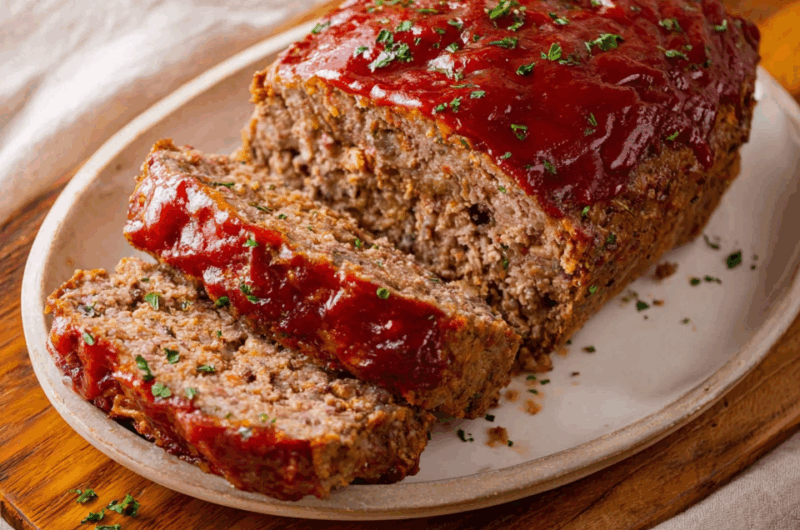
The savory, tender texture of this classic homestyle meatloaf brings all the warmth of traditional comfort food to your table. Its rich glaze caramelizes perfectly in the oven, creating a sweet and tangy finish that elevates every bite.
Whether you’re cooking for a cozy family dinner or prepping ahead for weekday meals, this sheet pan version is stress-free and incredibly satisfying. With only a handful of ingredients and easy cleanup, it’s sure to become a regular rotation in your home kitchen.
Full Recipe:
-
1 tablespoon olive oil
-
1 cup finely chopped onion
-
1½ teaspoons salt, divided
-
3 garlic cloves, minced
-
2 pounds 90/10 ground beef
-
2 large eggs
-
⅓ cup milk
-
¾ cup panko breadcrumbs
-
2 tablespoons ketchup
-
1 tablespoon Worcestershire sauce
-
1 teaspoon Italian seasoning
-
½ teaspoon ground black pepper
For the Glaze:
-
6 tablespoons ketchup
-
1 tablespoon packed brown sugar
-
1 tablespoon Worcestershire sauce
Directions:
-
Preheat your oven to 350°F (175°C). Line a rimmed baking sheet with parchment paper and lightly grease it.
-
In a small skillet over medium heat, heat olive oil. Add onions and ½ teaspoon salt, cooking until softened (about 6 minutes). Stir in garlic and cook for another minute. Remove from heat and allow to cool slightly.
-
In a large bowl, combine the cooled onion mixture with ground beef, eggs, milk, breadcrumbs, ketchup, Worcestershire sauce, Italian seasoning, remaining 1 tsp salt, and black pepper. Mix gently until just combined.
-
Shape the mixture into a loaf (8x4x2 inches) on the prepared baking sheet. Bake for 30 minutes.
-
While baking, whisk together ketchup, brown sugar, and Worcestershire sauce for the glaze.
-
After 30 minutes, remove the meatloaf and brush half of the glaze evenly over the top. Return to oven and bake for an additional 20–25 minutes or until the internal temperature reaches 160°F.
-
Brush the remaining glaze over the meatloaf and let it rest for 10 minutes before slicing and serving.
Prep Time: 10 minutes | Cooking Time: 50 minutes | Total Time: 1 hour 25 minutes
Kcal: 338 kcal | Servings: 8 servings
The Legacy of Meatloaf in American Cuisine
Meatloaf holds a special place in the heart of American home cooking. A comfort food icon that has graced family dinner tables for generations, meatloaf represents simplicity, nourishment, and tradition. Rooted in resourceful cooking methods brought over by European immigrants, the dish evolved over the years into a staple during the Great Depression—stretching protein with breadcrumbs and inexpensive ingredients to feed entire families. Today, it remains a nostalgic favorite, often evoking memories of mom’s kitchen, Sunday dinners, and cozy evenings at home. While versions vary across regions and households, the classic meatloaf endures for its versatility, ease, and deep sense of familiarity.
Why This Sheet Pan Meatloaf Stands Out
Unlike many traditional meatloaf recipes that rely on a loaf pan, this version is shaped and baked on a rimmed sheet pan. This simple shift not only improves ease of handling but enhances the final texture of the dish. By allowing more surface area to caramelize and hold the glaze, the meatloaf gains deeper flavor and a beautiful outer crust. It also avoids the “steamed” effect that can occur in deeper pans, where fat and moisture pool at the bottom. The result? A perfectly browned exterior with a moist and tender interior.
This method is ideal for those who want consistent cooking, easier slicing, and a visually appealing presentation. It’s a modern upgrade to a vintage favorite, ideal for today’s fast-paced kitchens where ease and flavor need to go hand-in-hand.
The Secret to a Moist and Flavorful Meatloaf
The key to a juicy, flavorful meatloaf lies in balance. Lean ground beef (preferably 90/10) is the star, but moisture-retaining ingredients like milk, eggs, and breadcrumbs ensure the loaf doesn’t dry out during baking. Aromatics such as finely chopped onions and garlic are sautéed beforehand, developing sweetness and depth before being folded into the mixture. This small step significantly enhances flavor, infusing the loaf from the inside out.
Additionally, seasoning is crucial. Salt, pepper, Worcestershire sauce, Italian herbs, and ketchup provide a complex savory base with subtle tang and umami. These elements work together to create the kind of flavor that satisfies the soul as much as the palate.
The Role of the Glaze and Why It’s Essential
One of the most iconic aspects of any meatloaf is the glaze—shiny, sweet, slightly tangy, and sticky. This version keeps it simple yet powerful with just three ingredients: ketchup, brown sugar, and Worcestershire sauce. Applied twice during baking—once to begin caramelization and again at the end for a fresh gloss—it creates a layered effect that enhances every bite.
The glaze does more than add visual appeal. It balances the rich meat with a kiss of sweetness and tang, providing a satisfying contrast to the savory interior. For many, the glaze is their favorite part, and doubling the amount for serving on the side is a recommended tweak for sauce lovers.
Why Panko Makes a Difference
Many recipes call for traditional breadcrumbs, but using Panko elevates the texture of the loaf. These Japanese-style breadcrumbs are lighter and larger, allowing them to absorb liquid more effectively without becoming gummy. This results in a more tender, less dense meatloaf. It’s a subtle change, but one that elevates the entire dish.
For those seeking a gluten-free version, finely crushed potato chips or gluten-free oats can be used in place of Panko. Just remember to adjust the salt content if using salted alternatives.
Versatile Pairings for a Balanced Meal
While meatloaf can certainly stand on its own, its appeal is amplified when paired with complementary side dishes. Creamy mashed potatoes are a traditional favorite, providing a fluffy, buttery contrast to the dense, meaty main. Roasted or steamed vegetables like green beans, carrots, or broccoli add color, freshness, and nutrition to the plate.
For a Southern-style twist, pair it with cornbread and collard greens. Or keep it simple with a side salad and a crusty slice of artisan bread. This flexibility makes meatloaf suitable for both everyday meals and casual entertaining.
Make-Ahead and Storage Tips
One of the major advantages of meatloaf is its adaptability to meal prep. The loaf can be assembled ahead of time and stored, unbaked, in the fridge for up to 2 days. This makes it an excellent choice for busy weeknights or weekend planning. You can even freeze the shaped, uncooked loaf for up to 3 months—just wrap it tightly to prevent freezer burn. Thaw overnight in the refrigerator before baking as usual.
Once cooked, meatloaf holds up beautifully for leftovers. Store in an airtight container for up to 5 days in the refrigerator. It reheats well in the oven, microwave, or even an air fryer, making it a reliable option for lunches or second dinners.
Creative Ways to Use Leftovers
If you find yourself with extra slices, you’re in luck—meatloaf leftovers are famously versatile. Reheat and serve as-is, or reinvent them into hearty meatloaf sandwiches with cheese and tomato slices on toasted sourdough. Crumble the meat into pasta sauces, tacos, or wraps for a quick protein boost. You can even dice it up and add it to a breakfast hash or top it on a savory grain bowl. The firm texture of cooked meatloaf holds up well in a variety of dishes, proving that this recipe keeps on giving.
Common Mistakes to Avoid
Many cooks struggle with meatloaf being too dry, too greasy, or falling apart. These issues usually come down to a few key errors:
-
Overmixing: Stirring the mixture too aggressively breaks down the meat fibers and results in a dense, rubbery texture. Mix until just combined.
-
Too much fat: While fat is essential for flavor, using beef with more than 20% fat can make the loaf greasy and cause it to shrink excessively.
-
Skipping the rest period: Letting the meatloaf rest after baking allows juices to redistribute. Slicing too soon will release these juices, leading to dryness.
-
Omitting the binder: Eggs and breadcrumbs are vital to structure. Without them, the loaf won’t hold together properly.
Ways to Customize Your Meatloaf
While this recipe is classic and dependable, it’s also highly customizable. You can blend different ground meats—like pork, veal, or turkey—for a more complex flavor. Add finely grated vegetables like zucchini or carrots for a nutrition boost without altering texture. Spice lovers can incorporate chili flakes, cumin, or smoked paprika. Want a richer finish? Try topping it with a layer of shredded cheese during the final few minutes of baking.
You can also replace the glaze with barbecue sauce, chipotle ketchup, or even a mustard-honey blend for a regional twist. Meatloaf may be rooted in tradition, but it’s also the perfect canvas for creativity.
Conclusion: A Dish That Endures
This sheet pan meatloaf recipe is more than a delicious meal—it’s a return to comforting roots with a modern edge. It takes everything we love about classic meatloaf—hearty, flavorful, satisfying—and enhances it with better texture, richer taste, and a stress-free cooking method.
Ideal for busy families, solo cooks, or anyone craving a homemade classic, this recipe is dependable, adaptable, and rewarding. From the sweet glaze to the savory core, each bite reminds us why meatloaf remains a timeless star in American kitchens. It’s not just food—it’s tradition, nostalgia, and love served by the slice.