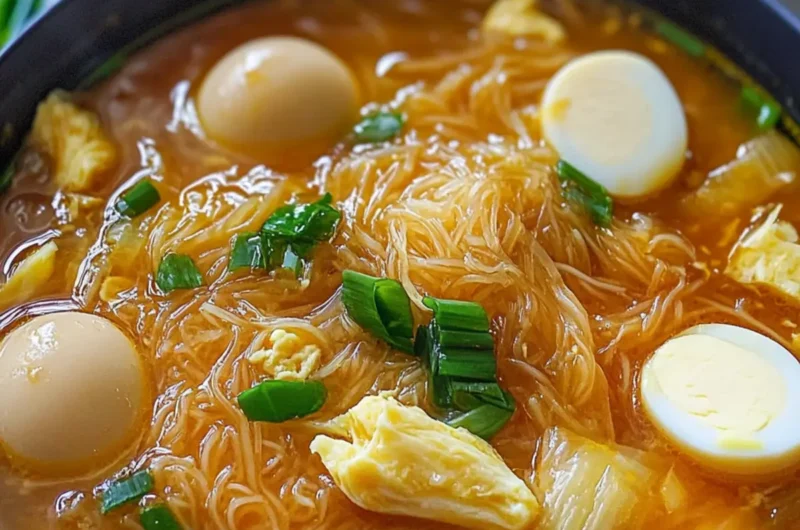
There’s something truly magical about the smell of savory broth simmering on the stove while the rain taps gently against the window. This Comforting Sotanghon and Egg Noodle Soup is my go-to recipe on those chilly days when I crave not just nourishment, but a warm hug in a bowl. With tender chicken, silky vermicelli noodles, and a burst of vibrant vegetables, it’s a dish designed to lift spirits and warm hearts.
What I love most about this soup is its incredible ease of preparation—you can bring this wholesome, nutrient-rich meal to the table in just 25 minutes! Whether you’re fighting off a cold or simply need a quick weeknight remedy against fast food fatigue, this recipe checks all the boxes. So, let’s dive into crafting a dish that’s not only satisfying but also packed with comforting flavors that will surely become a staple in your kitchen.
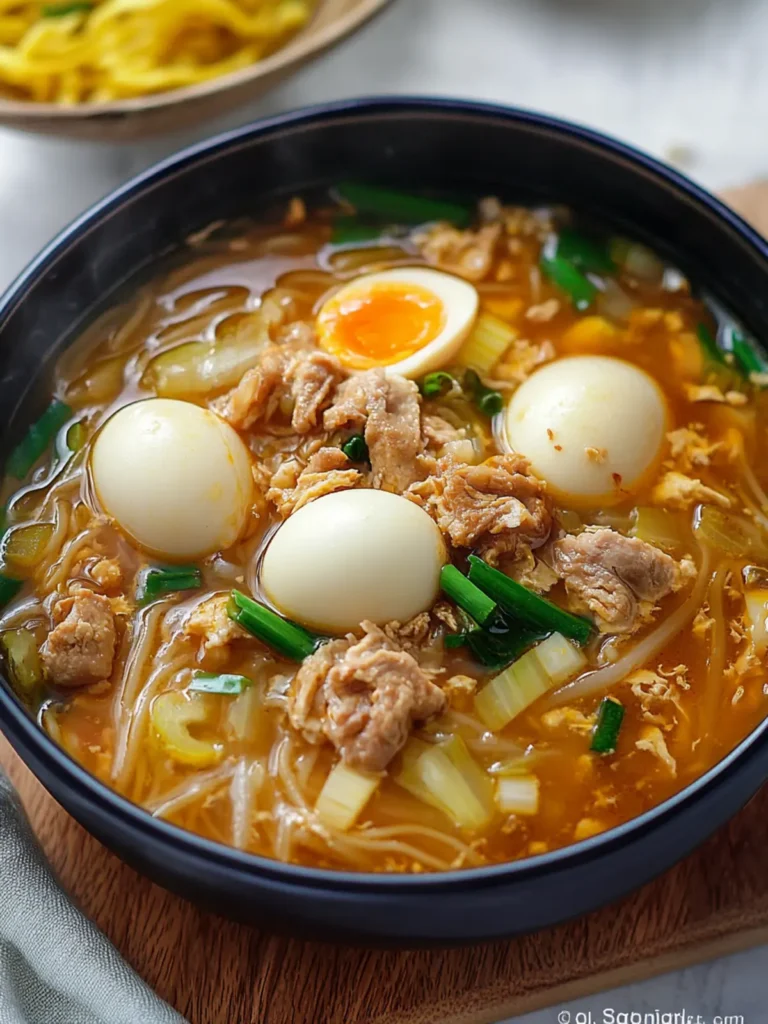
Why is Sotanghon And Egg Noodle Soup special?
Comforting aroma: The rich broth fills your home with warmth, making it the perfect dish for cozy evenings.
Nutrient-rich: Packed with protein and veggies, it’s a nourishing choice for recovery or simply a healthy meal.
Quick prep: This recipe allows you to whip up a delicious homemade soup in just 25 minutes—ideal for busy weeknights!
Versatile options: Easily adaptable, you can substitute ingredients like vermicelli with rice noodles or add tofu for a vegetarian twist.
Crowd pleaser: Perfect for family gatherings, it’s a dish that everyone will love, bringing smiles with each spoonful!
Sotanghon And Egg Noodle Soup Ingredients
• Dive into the delicious details below!
For the Soup Base
- Water – 1 ¼ quarts: This is the foundation of your soup; adjust for thicker broth if preferred.
- Chicken Powder – 2 ½ teaspoons: Boosts the flavor of the broth; using homemade chicken stock can elevate the taste even further.
- Annatto Powder – 1 teaspoon: Adds a lovely color and a mild, nutty flavor, enhancing the visual and taste appeal of your Sotanghon and Egg Noodle Soup.
- Fish Sauce – To taste: This ingredient introduces umami and saltiness; feel free to use soy sauce for a vegetarian alternative.
For the Noodles and Veggies
- Vermicelli – 160 grams: Soft and silky, it provides the perfect noodle base; rice noodles are a good substitute if needed.
- Cabbage – ¼ head, shredded: Offers freshness and crunch; you can swap this out for spinach or bok choy for a different twist.
- Spring Onions – 2 stalks, chopped: Imparts a fresh taste; chives can be used as a lovely alternative.
For the Aromatics
- Garlic – 5 cloves, crushed: Infuses depth and aroma; you can substitute with 1 teaspoon of garlic powder if in a pinch.
- Onion – 1, chopped: Adds sweetness and savory notes to the broth; shallots work wonderfully too.
- Toasted Garlic – 1 teaspoon: For garnishing, it adds a delightful crunch; fried onions are a great substitute for a similar texture.
For Cooking
- Cooking Oil – 3 tablespoons: Essential for sautéing the aromatics; any neutral oil will do just fine.
- Ground Black Pepper – To taste: Enhances and rounds out the overall flavor of the soup.
With these simple yet flavorful ingredients, you’re just minutes away from crafting a warm, comforting bowl of Sotanghon and Egg Noodle Soup that’s sure to become a beloved addition to your family’s recipe collection!
How to Make Sotanghon And Egg Noodle Soup
-
Heat Oil: Start by heating 3 tablespoons of cooking oil in a large cooking pot over medium heat. This sets the stage for those aromatic ingredients to shine!
-
Sauté Aromatics: Add 5 crushed garlic cloves and sauté until golden brown, about 2-3 minutes. Then, toss in 1 chopped onion and sauté until it’s soft and translucent, filling your kitchen with delightful fragrances.
-
Add Flavor: Stir in 1 teaspoon of annatto powder and a splash of fish sauce (to taste) for that umami boost. Cook for another 1-2 minutes to meld the flavors together, creating a fragrant base.
-
Boil Water: Pour in 1 ¼ quarts of water and bring it to a rapid boil. This is where the magic happens as your broth begins to bubble with promise!
-
Cook Noodles: Add 160 grams of vermicelli and 2 ½ teaspoons of chicken powder, then cover the pot. Allow it to re-boil for about 1 minute, bringing back that comforting heat.
-
Simmer: Reduce the heat and let the soup simmer for 3 minutes. Gently toss the noodles to separate them to ensure they soak in all the yummy broth flavor.
-
Add Cabbage: Mix in ¼ head of shredded cabbage and cover once more. Cook for an additional 2 minutes, allowing the veggies to soften slightly while maintaining their vibrant crunch.
-
Finish Off: Incorporate the boiled and peeled eggs, along with 2 chopped spring onions. Taste and adjust seasoning with more fish sauce and black pepper as needed.
-
Serve: Transfer your beautiful soup into serving bowls, sprinkle with 1 teaspoon of toasted garlic for that crunchy finish, and serve hot! Enjoy your cozy bowl of comfort.
Optional: Serve with a wedge of lemon or lime for an extra zing!
Exact quantities are listed in the recipe card below.
Make Ahead Options
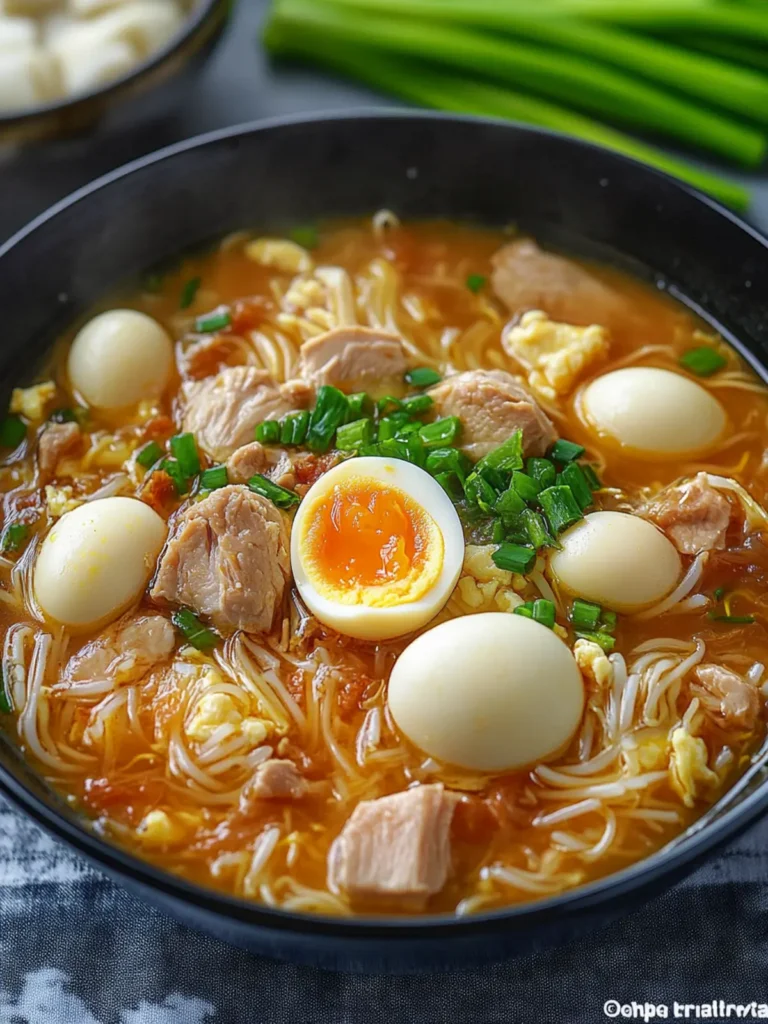
Sotanghon and Egg Noodle Soup is a fantastic dish for meal prep, allowing you to save time during busy weeknights! You can prepare the soup base (garlic, onion, broth, and seasonings) up to 24 hours in advance. Simply refrigerate the mixture in an airtight container and when you’re ready to serve, just bring it to a boil, add the vermicelli, and shredded cabbage. The boiled eggs can also be prepped ahead; store them whole in the fridge until you’re ready to slice them in. To maintain the soup’s freshness and prevent the noodles from becoming too soft, consider adding those just before serving. Enjoy the comfort of a warm homemade meal with minimal effort!
Expert Tips for Sotanghon and Egg Noodle Soup
-
Garlic Care: Keep an eye on the garlic while sautéing; burning it can lead to a bitter taste in your broth.
-
Perfect Noodles: Ensure you’re using the right cooking time for vermicelli; overcooking can result in mushy noodles in your Sotanghon And Egg Noodle Soup.
-
Flavor Boost: For a deeper flavor, consider using homemade chicken stock instead of water, elevating your soup to a restaurant-quality dish.
-
Vegetarian Twist: If you’re making a vegetarian version, replace chicken powder with a plant-based broth and add proteins like tofu for a fulfilling meal.
-
Garnish Wisely: Don’t skimp on the toasted garlic; it adds a wonderful crunch and flavor contrast that elevates the taste experience.
How to Store and Freeze Sotanghon and Egg Noodle Soup
Fridge: Store your soup in an airtight container for up to 3 days. To keep the noodles from getting mushy, consider adding fresh noodles during reheating.
Freezer: For longer storage, freeze the soup in individual portions for up to 3 months. Pour into freezer-safe containers, leaving space for expansion as it freezes.
Reheating: When ready to enjoy, thaw in the fridge overnight. Reheat gently on the stovetop, adding a splash of water if necessary to refresh the broth.
Shelf-life Tips: To maintain the best quality, avoid freezing the soup with the noodles if you plan to freeze it long-term. Instead, add them fresh during reheating for the best texture in your Sotanghon and Egg Noodle Soup.
Sotanghon And Egg Noodle Soup Variations
Feel like getting creative in the kitchen? Explore these delightful twists that will make your Sotanghon and Egg Noodle Soup even more special!
-
Rice Noodles: Swap vermicelli for rice noodles for a chewier texture that’s equally comforting.
-
Vegetarian Delight: Omit chicken powder, use vegetable stock, and add cubed tofu to keep it hearty while staying meat-free.
-
Spicy Kick: Toss in fresh chili slices or a dash of hot sauce for a spicy version that will warm you right up.
-
Mushroom Magic: Add sliced shiitake or oyster mushrooms for an earthy flavor boost and extra texture.
-
Coconut Cream: Stir in a splash of coconut milk for a creamy, tropical twist that pairs beautifully with the broth.
-
Bok Choy Boost: Substitute shredded cabbage with bok choy for a slightly different texture and added nutrition.
-
Lemon Zest: Grate in some lemon zest before serving to brighten up the soup and enhance its fresh flavors.
-
Egg Variations: Experiment with soft-boiled or poached eggs instead of boiled for a luxurious, rich experience in each bowl.
Let your taste buds guide you as you craft your perfect bowl of comfort!
What to Serve with Sotanghon and Egg Noodle Soup?
Indulge in a full meal experience with these delightful pairings that complement the warmth of your cozy soup.
-
Crispy Spring Rolls: Their crunch adds a delightful contrast to the soup’s silky texture, making each bite an adventure.
-
Garlic Rice: Fragrant and buttery, garlic rice is a perfect side that soaks up the soup’s savory broth, enhancing every spoonful.
-
Fresh Vegetable Salad: A light salad with vibrant greens and a zesty dressing balances the soup’s richness, bringing freshness to your plate.
-
Lemon Wedge: A simple squeeze of lemon brightens the flavors in your bowl, adding a refreshing zing that pairs beautifully with the warm broth.
-
Chili Sauce: For those who crave a kick, serve with a side of chili sauce to drizzle over the soup, igniting a burst of flavor with each bite.
-
Toasted Baguette: Accompany your soup with slices of crispy baguette for dipping; it’s an inviting way to enjoy the broth.
-
Chamomile Tea: With its gentle floral notes, chamomile tea provides a calming contrast and enhances the cozy experience of your meal.
-
Fruit Sorbet: End your culinary journey on a sweet note with a light fruit sorbet; its refreshing coolness cleanses the palate after the comforting warmth of the soup.
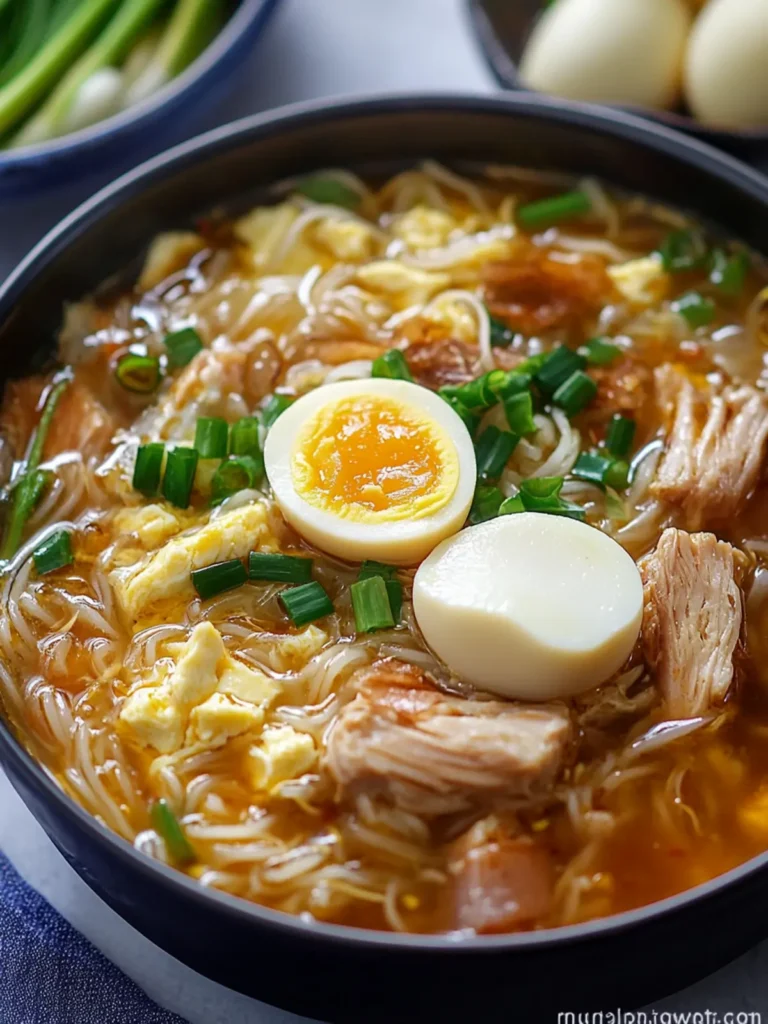
Sotanghon and Egg Noodle Soup Recipe FAQs
How do I select the right garlic for the soup?
Absolutely! When choosing garlic, look for firm heads without any dark spots or sprouting. Fresh garlic will provide a stronger flavor and aroma, essential for your Sotanghon and Egg Noodle Soup.
What is the best way to store leftover soup?
I recommend storing any leftovers in an airtight container in the fridge, where they’ll stay fresh for up to 3 days. To prevent the noodles from becoming mushy, it’s best to add fresh noodles when reheating.
Can I freeze my Sotanghon and Egg Noodle Soup?
Yes! For freezing, pour your soup into freezer-safe containers, leaving about an inch of space at the top for expansion. It can be frozen for up to 3 months. When ready to enjoy, thaw it overnight in the fridge and reheat on the stovetop, adding a splash of water if needed.
Why are my noodles sticking together?
Very! Noodles can stick if they aren’t stirred gently during cooking or if they’re overcooked. To avoid this, immediately toss the noodles while simmering to separate them and maintain that lovely texture.
Is this recipe suitable for someone with soy allergies?
Definitely! If you or someone you’re serving has a soy allergy, just swap out fish sauce for a homemade mix of salt and water or use coconut aminos as a perfect alternative. This will keep your Sotanghon and Egg Noodle Soup deliciously flavorful without the soy!
What can I do if my broth is too bland?
If you find your broth lacking in flavor, don’t hesitate to adjust! Stir in an extra splash of fish sauce, a pinch of salt, or even a little squeeze of lime juice before serving. Tasting as you go will help you achieve that perfect deliciousness in your Sotanghon and Egg Noodle Soup.
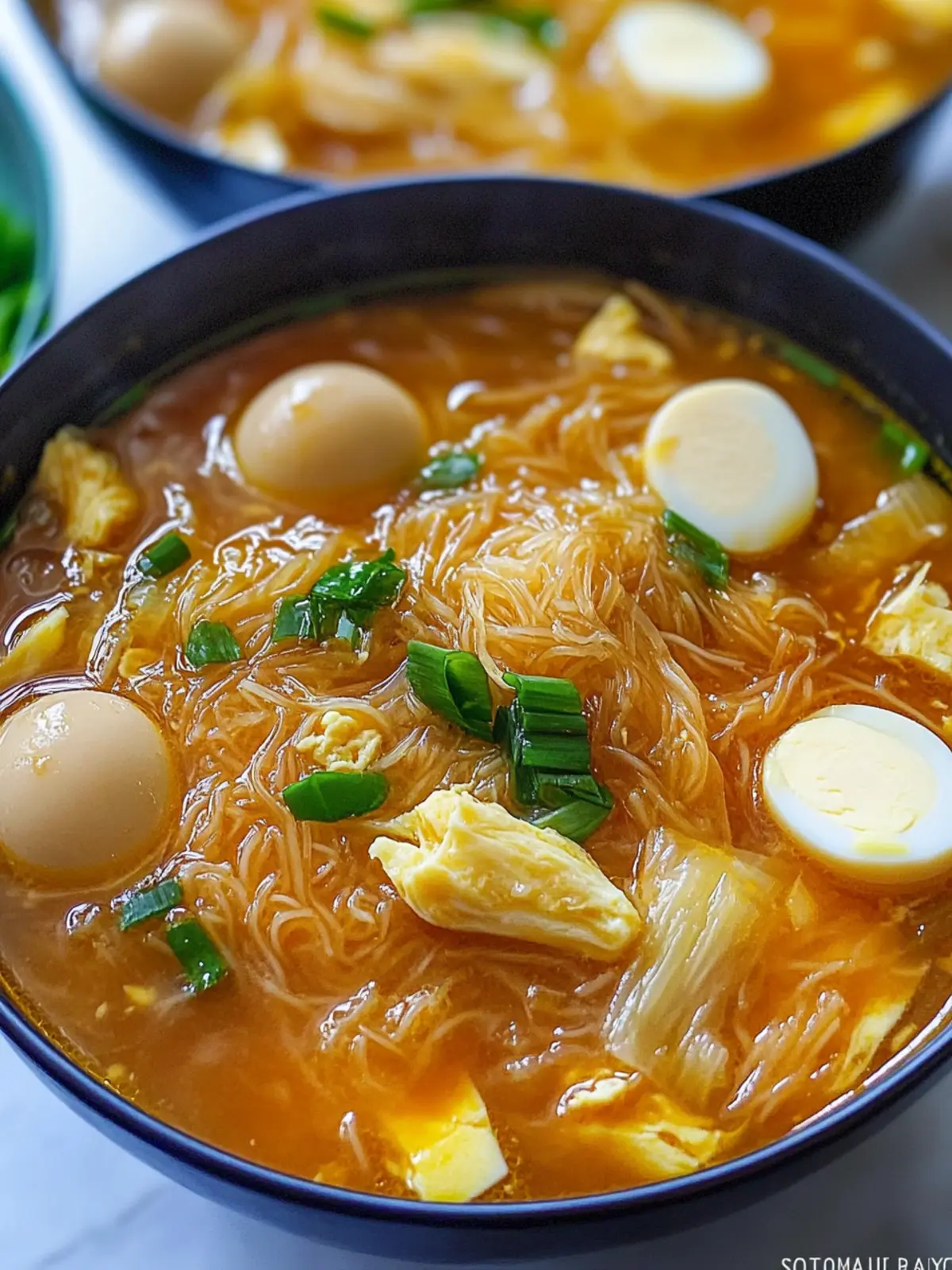
Sotanghon and Egg Noodle Soup: Cozy Comfort in a Bowl
Ingredients
Equipment
Method
- Heat oil in a large cooking pot over medium heat.
- Add crushed garlic and sauté until golden brown, about 2-3 minutes. Then, add chopped onion and sauté until soft.
- Stir in annatto powder and a splash of fish sauce; cook for another 1-2 minutes.
- Pour in water and bring to a rapid boil.
- Add vermicelli and chicken powder, cover the pot, and allow it to re-boil for about 1 minute.
- Reduce the heat and let the soup simmer for 3 minutes, tossing the noodles gently.
- Mix in shredded cabbage and cover once more. Cook for an additional 2 minutes.
- Incorporate boiled and peeled eggs and chopped spring onions. Adjust seasoning with more fish sauce and black pepper as needed.
- Transfer soup into serving bowls, sprinkle with toasted garlic, and serve hot.