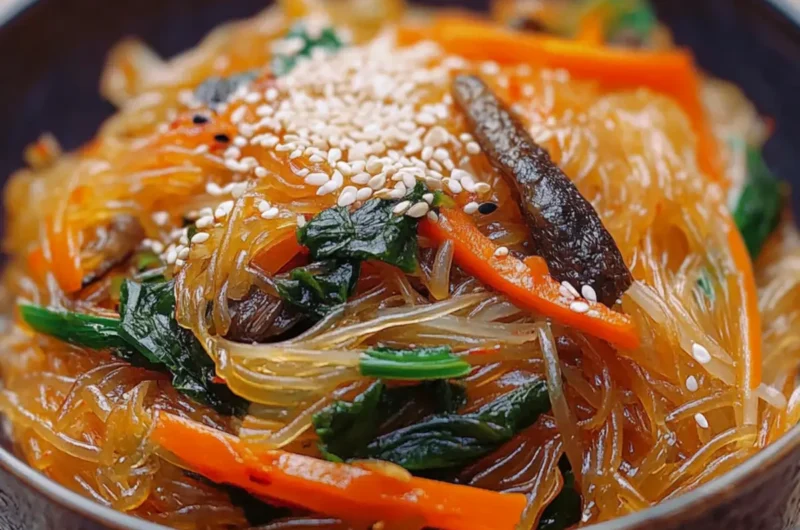
There’s something truly enchanting about the vibrant colors and flavors of a Korean kitchen, and this traditional dish, Korean Japchae, embodies that magic. Imagine the tender, chewy glass noodles mingling with fresh, crisp vegetables, each bite offering a little taste of sweet and savory perfection. I first discovered this recipe while exploring Korean cuisine, where I was immediately captivated by the umami-rich soy sauce and the nutty warmth of sesame oil.
Perfect for both festive occasions and cozy weeknight dinners, Japchae is more than just a meal; it’s a family gathering on a plate. Whether you choose to add marinated beef, chicken, or keep it plant-based with tofu, this dish adapts beautifully to your dietary needs. By opting for gluten-free ingredients, you can savor the rich flavors without sacrifice. Join me as we dive into the world of Korean cooking with this delightful Japchae recipe, and bring a taste of Korea into your home kitchen!
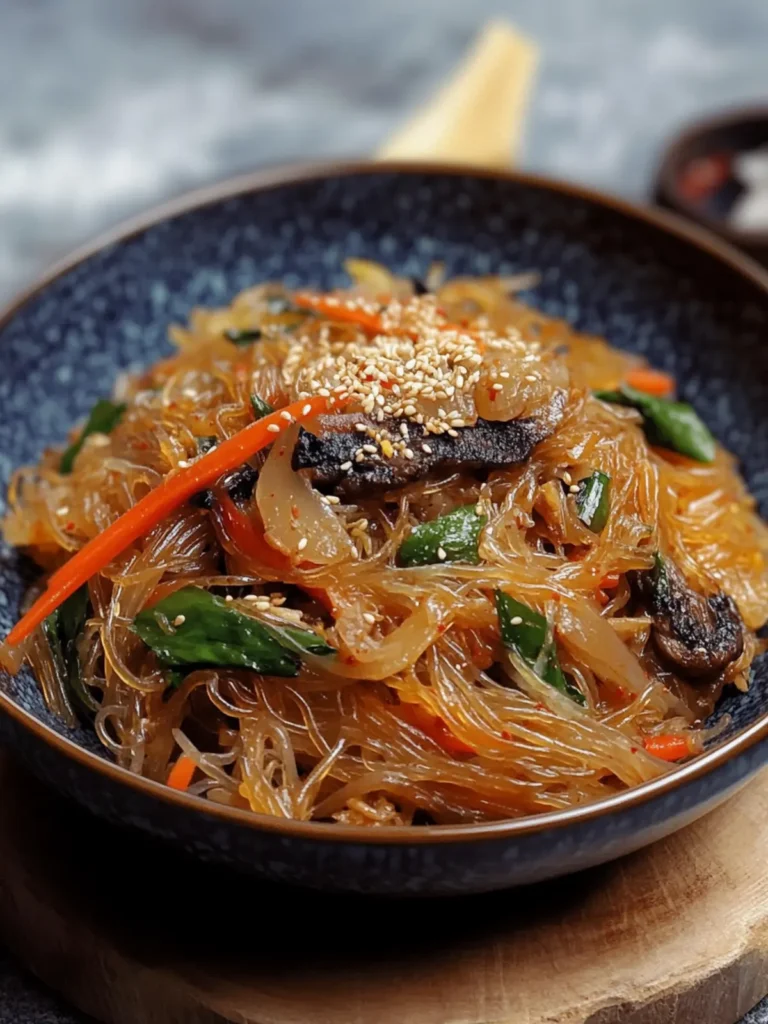
Why is Korean Japchae a must-try dish?
Vibrant colors: The beautiful mix of vegetables not only makes the dish visually appealing but also packs it with nutrients.
Memorable flavors: Each bite offers a delightful balance of sweet, savory, and nutty tastes that will transport your taste buds straight to Korea.
Versatile options: You can easily adapt the recipe with your choice of protein or go fully vegetarian by adding tofu, making it suitable for everyone.
Quick preparation: With just a few simple steps, you’ll have a satisfying meal ready in no time, ideal for busy weeknights or festive gatherings.
Cultural experience: Preparing Japchae brings a piece of Korean culinary tradition into your kitchen, making every meal a special occasion. Why not pair it with some homemade sides? Check out our kimchi recipes for a complete Korean experience!
Korean Japchae Ingredients
For the Noodles
• Korean Glass Noodles (Dangmyeon) – Provides a chewy and elastic base; remember to rinse after boiling to prevent sticking.
• Sesame Oil – Adds a rich, nutty flavor during noodle preparation; essential for that authentic taste.
For the Vegetables
• Carrot – Adds sweetness and vibrant color; julienne for quick cooking.
• Onion – Provides depth with its natural sweetness; slice thinly to enhance flavor absorption.
• Spinach – Offers a fresh green color; blanch briefly to retain nutrients.
• Shiitake Mushrooms – Brings umami essence; can be swapped for button mushrooms if needed.
• Red Bell Pepper – Infuses sweetness and crunch; julienne for even cooking.
For the Protein
• Beef or Chicken (optional) – Adds richness and protein; marinate for deeper flavor. Substitute with tofu for a gluten-free, vegetarian option.
For Flavoring
• Soy Sauce – Essential for umami; adjust to taste for the desired saltiness.
• Sugar – Balances the savory flavors; don’t skip for that touch of sweetness.
• Minced Garlic – Enhances aroma and flavor; use fresh for the best impact.
• Sesame Seeds – For garnish; can be toasted for an intensified nutty flavor.
• Egg – Fried into an omelette to garnish; adds texture and visual appeal.
• Green Onions – For fresh taste and color; sprinkle generously for added crunch.
You now have all the Korean Japchae ingredients you need to create this delectable dish that resonates with comfort and flavor! Happy cooking!
How to Make Korean Japchae
-
Cook the Noodles: Begin by boiling the Korean glass noodles in a pot of water for 7–8 minutes until they are tender yet chewy. Drain and rinse under cold water to prevent sticking, then toss them with a drizzle of sesame oil for flavor.
-
Prepare the Vegetables: While the noodles are cooking, julienne the carrots and red bell pepper, and slice the onion and shiitake mushrooms. Blanch the spinach in boiling water for just a minute, squeeze it dry, and season lightly.
-
Cook Vegetables Separately: Heat a large skillet over medium heat and stir-fry each vegetable separately, starting with the carrots until slightly softened, followed by the onion, red bell pepper, and mushrooms. Set each cooked vegetable aside as you go.
-
Cook the Protein: In the same skillet, add your marinated beef or chicken (or tofu for a vegetarian option) and cook until browned and fully cooked through. Remove the protein from the skillet and set aside.
-
Combine Ingredients: In a large mixing bowl, combine the cooked noodles and vegetables, then whisk together soy sauce, sugar, sesame oil, minced garlic, and sesame seeds. Pour this sauce over the noodle mixture and toss everything together until evenly coated.
-
Final Stir-Fry: Return the combined mixture to the skillet and stir-fry on medium heat for 2-3 minutes to meld the flavors together. Taste and adjust the seasoning as necessary.
-
Serve: Transfer your delicious Korean Japchae to a serving platter and garnish with strips of fried egg, a sprinkle of sesame seeds, and chopped green onions. Serve warm or let it cool to room temperature.
Optional: Serve with a side of kimchi for an authentic touch!
Exact quantities are listed in the recipe card below.
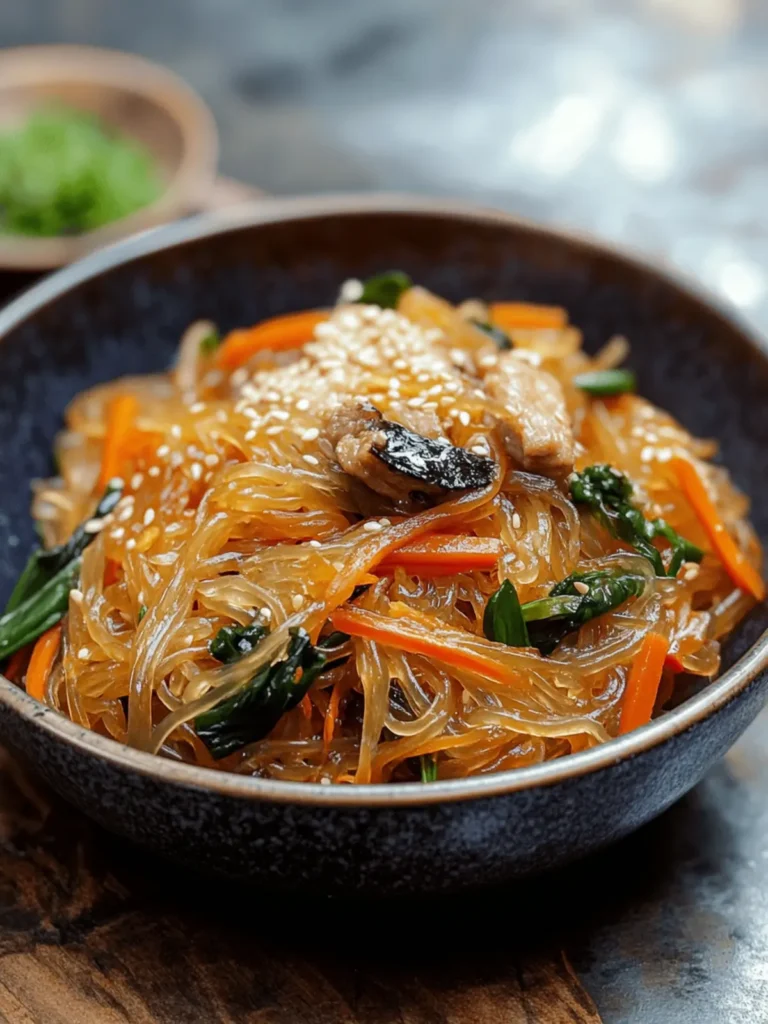
Make Ahead Options
These Korean Japchae (Stir Fried Glass Noodles) are perfect for meal prep! You can prepare the glass noodles, vegetables, and protein (beef, chicken, or tofu) up to 24 hours in advance. To maintain quality, cook the noodles and toss them with a little sesame oil before storing. Slice and blanch the vegetables, and store them in airtight containers. The protein can be marinated and cooked ahead, then kept in the refrigerator. When you’re ready to serve, simply stir-fry all the prepped components together for 2-3 minutes to meld the flavors. This way, you’ll enjoy delicious, homemade Japchae without the last-minute rush!
Expert Tips for Korean Japchae
• Veggie Priorities: Ensure each vegetable is cooked separately to maintain their unique textures and avoid sogginess in your Korean Japchae.
• Noodle Care: Don’t overcook the glass noodles; they should be tender yet still chewy. Rinse them right after boiling for best results.
• Flavor Balance: Adjust the soy sauce and sugar to your taste preference—this balance is key to achieving the delightful flavor profile of Korean Japchae.
• Authentic Finishing Touch: For a richer flavor, finish your dish with a drizzle of toasted sesame oil before serving—it truly elevates the taste!
• Creative Variations: Feel free to experiment with different proteins or vegetables; this dish is versatile and can easily cater to dietary preferences.
• Garnish with Love: Don’t skip the garnishes! Fried egg strips and sesame seeds not only enhance appearance but also add layers of flavor and texture to your bowl.
What to Serve with Korean Japchae?
Elevate your meal experience with perfect pairings that enhance the flavors and textures of your delicious stir-fried noodles.
-
Steamed Rice: A classic accompaniment that soaks up the savory flavors of the Japchae, making each bite even more satisfying.
-
Kimchi: This spicy fermented side adds a tangy crunch, balancing the dish’s sweetness and deepening your culinary adventure.
-
Pickled Radishes: Their crisp, refreshing bite contrasts beautifully with the soft noodles, brightening every mouthful.
-
Sesame Chicken: Featuring a nutty glaze, this dish harmonizes with the flavors of Japchae for a delightful protein-packed meal.
-
Miso Soup: With its warm, earthy notes, this soup offers a delicate contrast to the sweetness of the noodles, making it a comforting addition.
-
Korean Fried Zucchini: Crispy, thinly sliced zucchini provides a delightful texture and a hint of saltiness, complementing the dish beautifully.
-
Green Salad: A fresh salad with a light vinaigrette brings a refreshing element to the table, balancing the richer flavors of Japchae.
-
Chilled Soju: A popular Korean spirit, its smoothness refreshes the palate and enhances the overall dining experience.
-
Sesame Balls: For dessert, indulge in these sweet, chewy treats with a hint of nuttiness, rounding out your meal on a satisfying note.
Korean Japchae Variations & Substitutions
Feel free to get creative with this dish and personalize it to your tastes or dietary needs!
-
Vegetarian Delight: Replace beef or chicken with firm tofu marinated in soy sauce for a hearty vegetarian option.
Add a splash of sesame oil during cooking to enhance the flavor. -
Spicy Kick: Mix in some gochujang (Korean chili paste) or sliced fresh jalapeños to elevate the heat level.
This will add a delightful spicy twist that complements the sweet and savory notes perfectly. -
Veggie Boost: Incorporate seasonal vegetables like zucchini, broccoli, or snap peas for an extra crunch and nutrition.
Feel free to experiment with whatever veggies you have on hand—the more colorful, the better! -
Noodle-Free Option: Try using spiralized zucchini or carrot noodles for a low-carb twist on traditional Japchae.
This is a fantastic way to enjoy the flavors without the carbs, and it stays light and refreshing! -
Sweet & Savory: Add a touch of honey or maple syrup to the sauce for a slightly sweeter profile.
This little tweak can enhance the overall balance of flavors, making each bite even more delightful. -
Protein Variety: Swap beef for shredded pork or marinated shrimp for a different protein experience.
Each protein will lend its unique flavor, making this dish versatile for any occasion. -
Nutty Twist: Toss in toasted peanuts or cashews before serving for an unexpected crunch and nutty flavor.
Top your Japchae with nuts not only for texture but also to enrich the dish with a delicious roasted taste. -
Fusion Style: Mix in some cooked noodles like Udon or Soba for a fun, fusion take on traditional Japchae.
This will elevate the dish into a delightful mash-up that your family will talk about for days!
Storage Tips for Korean Japchae
Fridge: Store leftover Korean Japchae in an airtight container for up to 3 days to maintain its freshness and flavors.
Freezer: For longer storage, freeze Japchae in a freezer-safe container for up to 2 months. Thaw in the fridge overnight before reheating.
Reheating: To revive the texture, reheat in a skillet over medium heat, adding a splash of water or more sesame oil to prevent sticking. Stir occasionally until heated through.
Room Temperature: Serve at room temperature if enjoying leftovers within 2 hours; otherwise, refrigerate to ensure safety.
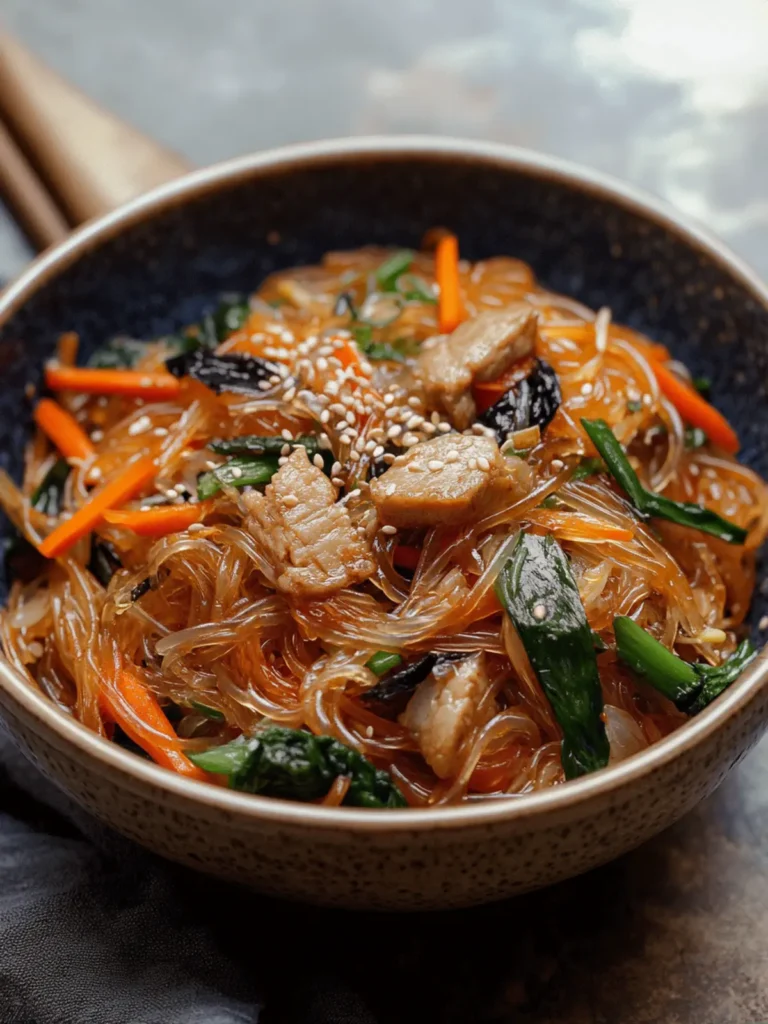
Korean Japchae (Stir Fried Glass Noodles) Recipe FAQs
What kind of glass noodles should I use for Japchae?
I recommend using Korean glass noodles, known as Dangmyeon, which are made from sweet potato starch. These noodles provide the chewy texture that is iconic to Japchae. Make sure to rinse them after boiling to avoid sticking together!
How should I store leftover Korean Japchae?
Store any leftover Korean Japchae in an airtight container in the refrigerator for up to 3 days. This will help maintain its fresh flavors and texture. When you’re ready to enjoy it again, simply reheat it in a skillet over medium heat, adding a little water or sesame oil to revive its original taste.
Can I freeze Korean Japchae?
Absolutely! You can freeze Korean Japchae in a freezer-safe container for up to 2 months. To reheat, simply thaw it overnight in the refrigerator and then use a skillet to warm it up gently. Add some sesame oil to enhance the flavors while reheating!
What if my glass noodles are too sticky?
If your glass noodles are too sticky, it could be due to overcooking or not rinsing them after boiling. Always cook them for only 7–8 minutes until tender, and immediately rinse them under cold water afterward. Tossing them with a bit of sesame oil right after cooking will also help reduce stickiness.
Can I make Japchae dairy-free?
Yes, Korean Japchae is naturally dairy-free! You can keep it vegan by using tofu instead of meat. Just marinate the tofu as you would with beef or chicken, and it works beautifully in this dish. Enjoy all the vibrant flavors without any dairy!
How long can I leave leftovers out at room temperature?
It’s best to serve leftovers within 2 hours if they’re at room temperature. After that, they should be refrigerated to ensure safety and quality. If you’re serving Japchae at a gathering, keep it chilled until just before serving for the best experience!
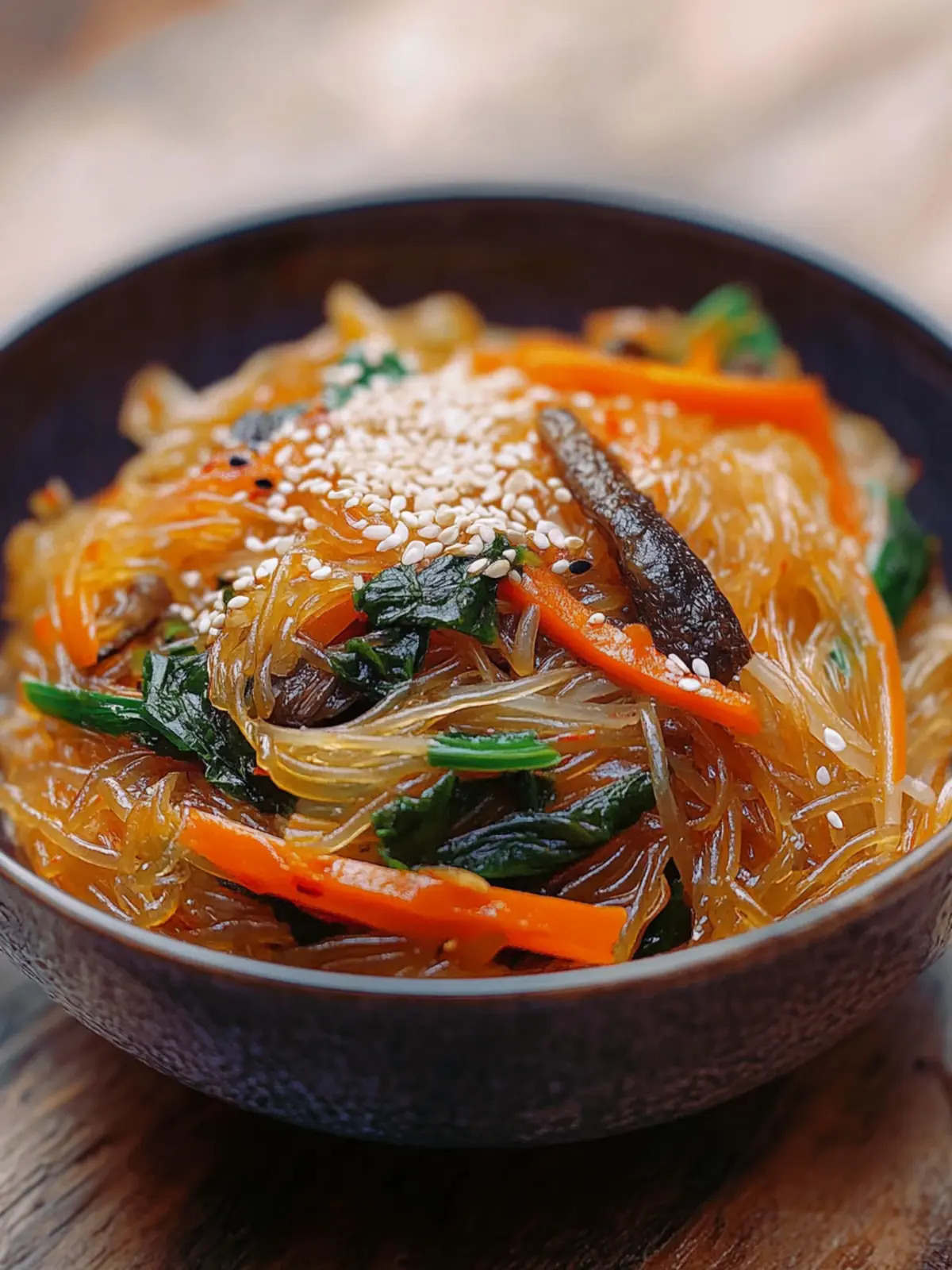
Delicious Korean Japchae: Easy Stir Fried Glass Noodles Delight
Ingredients
Equipment
Method
- Cook the noodles by boiling Korean glass noodles in a pot of water for 7–8 minutes until tender yet chewy. Drain and rinse under cold water, then toss with sesame oil.
- Prepare the vegetables by julienning the carrots and red bell pepper, and slicing the onion and shiitake mushrooms. Blanch the spinach briefly.
- Cook each vegetable separately in a skillet, starting with carrots, followed by onion, red bell pepper, and mushrooms. Set aside after cooking.
- In the same skillet, add the marinated protein and cook until fully cooked through. Set aside.
- In a large mixing bowl, combine the noodles and vegetables. Whisk together soy sauce, sugar, sesame oil, minced garlic, and sesame seeds, and pour over the noodle mixture. Toss to coat.
- Return the combined mixture to the skillet and stir-fry on medium heat for 2-3 minutes to meld flavors. Adjust seasoning as needed.
- Serve the Japchae garnished with fried egg strips, sesame seeds, and chopped green onions. Enjoy warm or at room temperature.