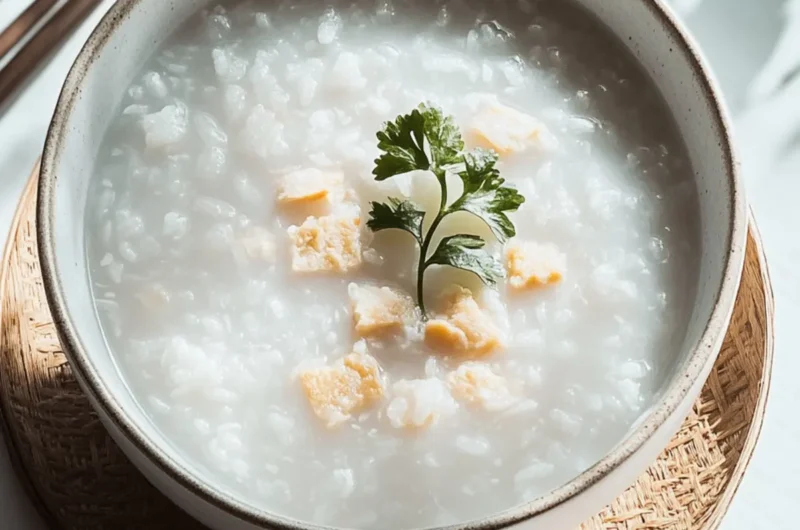
There’s a distinct sense of comfort that comes from a steaming bowl of Chinese congee, a creamy rice porridge that has warmed hearts and bellies for centuries. The moment the silky texture touches your lips, you’ll find it hard to believe that such a soothing dish can be so effortlessly simple to make. On a chilly morning or after a long day, this delightful concoction can be whipped up with just a few pantry staples, making it the perfect antidote for both hunger and fatigue.
I remember the first time I tried congee; it felt as if every bite was a warm hug from the inside out. With endless options for toppings, from savory soy sauce to crispy fried shallots, this versatile dish can be dressed up or kept understated according to your mood. Let’s dive into my favorite recipe for classic Chinese congee, a dish that transcends mere breakfast fare and offers nourishment and comfort in equal measure. Whether you’re fighting the chill of winter or simply craving something wholesome, this creamy delight is a go-to you’ll want to return to time and again.
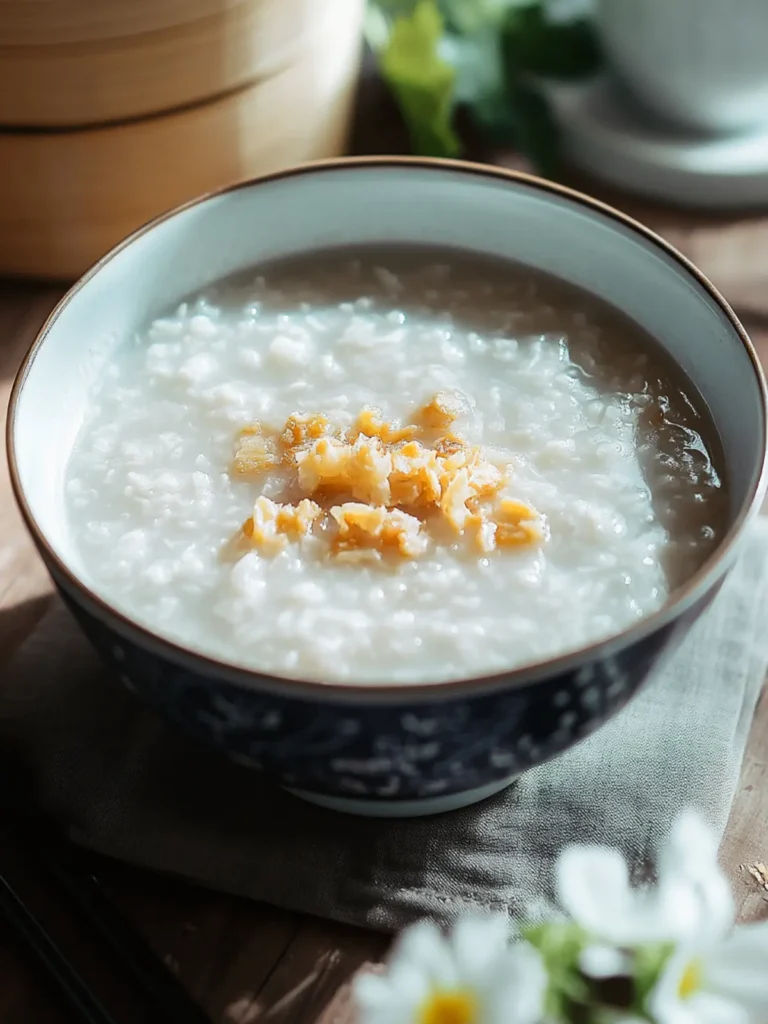
Why is Chinese Congee (Rice Porridge) so comforting?
Warmth at Its Core: Chinese congee serves as a perfect antidote for cold days or fatigue, wrapping you in a soothing embrace with each spoonful.
Easily Adaptable: This recipe can be customized with an endless array of toppings, allowing you to express your culinary creativity and cater to any dietary need, from gluten-free to vegetarian options.
Quick & Simple: With just a few pantry staples and basic cooking techniques, you can whip up a nutritious bowl of congee in no time—ideal for busy mornings or spontaneous cravings.
Nourishing & Wholesome: Beyond its comforting nature, congee is a hearty option that provides essential carbs, leaving you both satisfied and energized.
Crowd Pleaser: Whether you’re feeding a family or hosting a brunch, this dish can easily be scaled up, making it a hit with everyone at the table!
If you’re interested in more delicious ideas, be sure to check out how to personalize it with various toppings and proteins for a truly unique experience!
Chinese Congee (Rice Porridge) Ingredients
For the Rice
• Long-Grain White Rice – Acts as the foundation for a creamy congee; jasmine or short-grain rice can be substituted for a different texture.
For the Liquid
• Water or Chicken Broth – Use broth for an enriched flavor that elevates your Chinese congee to a new level.
For Seasoning
• Salt – Important for enhancing the overall taste; adjust according to personal preference for saltiness.
For Aroma
• Fresh Ginger – Provides a fragrant kick to your porridge; feel free to leave it out if you prefer a milder flavor.
For Protein (Optional)
• Shredded Chicken, Pork, or Beef – Adds a hearty touch; swap with tofu for a vegetarian-friendly alternative.
For Toppings (Optional)
• Soy Sauce – A splash brings out the umami notes and complements your Chinese congee beautifully.
• Sliced Scallions – Fresh and vibrant, these add a lovely crunch and color contrast.
• Pickled Vegetables – Introduce a tangy flair for balance with the creamy base.
• Century Egg – A traditional topping that provides a unique flavor profile.
• Sesame Oil – A drizzle deepens the flavor and adds a rich aroma for a delightful finish.
• Fried Shallots – Adds a crispy texture for a contrasting bite against the smooth porridge.
How to Make Chinese Congee (Rice Porridge)
-
Rinse the Rice: Begin by rinsing the long-grain white rice under cold water until the water runs clear, removing excess starch for a smoother texture.
-
Combine Ingredients: In a large pot, combine the rinsed rice, 8 cups of water or chicken broth, and fresh ginger. Bring to a boil over medium heat, letting the aromas fill your kitchen.
-
Simmer Gently: Once boiling, reduce the heat to low, partially cover the pot, and let it simmer for 60 to 75 minutes. Stir occasionally until the congee reaches a creamy consistency.
-
Adjust Consistency: If you prefer a thicker congee, allow it to cook a bit longer. For a thinner texture, add more water as needed while stirring.
-
Add Proteins (Optional): If using shredded chicken, pork, or beef, add these proteins during the last 15 minutes of cooking to heat them through and blend the flavors beautifully.
-
Season to Taste: Once cooked, season your congee with salt and a splash of soy sauce. For an extra layer of flavor, consider stirring in a bit of sesame oil.
-
Serve and Enjoy: Ladle the warm congee into bowls and invite everyone to customize their dishes with their favorite toppings. Enjoy the soothing warmth!
Optional: Try adding crispy fried shallots for a delightful crunch!
Exact quantities are listed in the recipe card below.
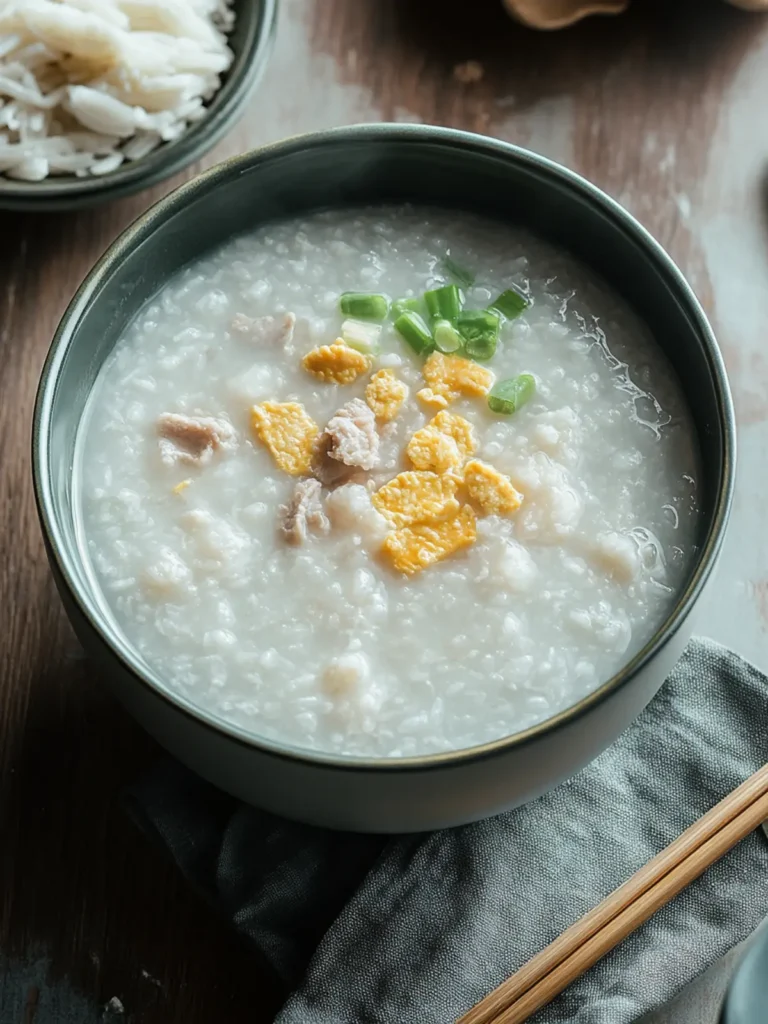
How to Store and Freeze Chinese Congee
-
Fridge: Store any leftover Chinese congee in an airtight container in the refrigerator for up to 3 days. When reheating, add a splash of water to restore its creamy texture.
-
Freezer: For longer storage, freeze portions of congee in freezer-safe containers for up to 2 months. To reheat, thaw overnight in the fridge and warm gently on the stove, adding water as needed.
-
Reheating: Reheat congee over medium heat, stirring occasionally. If it thickens too much during refrigeration or freezing, just stir in a bit of water or broth to regain that comforting creaminess.
-
Make-Ahead Tips: Consider making a larger batch of congee to enjoy throughout the week. It’s a delightful comfort food that can be modified with various toppings to keep it interesting!
What to Serve with Chinese Congee (Rice Porridge)?
Bring warmth and comfort to your table by perfectly pairing your creamy bowl of congee with delightful sides and toppings.
-
Crispy Fried Shallots: Adds a satisfying crunch and nutty flavor, perfectly contrasting the smooth, creamy porridge.
-
Soy Sauce Drizzle: A splash of this savory condiment enhances the umami notes of the congee, elevating the overall taste experience.
-
Pickled Vegetables: The tangy bite of pickled veggies cuts through the richness of the congee, providing brightness and balance.
-
Savory Stacked Tofu: Silky tofu complements the congee delightfully, making it both a filling and protein-rich addition for a heartier meal.
-
Century Egg Slices: For those craving traditional flavor, century eggs offer a unique taste that pairs beautifully with the mild sweetness of the porridge.
-
Sliced Scallions: Fresh and vibrant, these green onions add a pop of color and a mild onion flavor that brightens every bowl.
Each pairing enriches the congee experience, inviting you to discover new textures and flavors as you enjoy this comforting dish!
Expert Tips for Chinese Congee (Rice Porridge)
-
Rinse Thoroughly: Make sure to rinse the rice until the water runs clear to avoid overly sticky congee. This simple step makes a huge difference in texture.
-
Cooking Time Matters: Adjust the simmering time based on your texture preference—longer for a velvety, thicker congee and shorter for a more soup-like consistency.
-
Regular Stirring: Stir the mixture occasionally to prevent the rice from sticking to the bottom of the pot. This helps create that creamy texture we all love in Chinese congee.
-
Taste and Adjust: Make it a habit to taste and adjust the seasoning towards the end of cooking. This ensures the best and most balanced flavor for your congee.
-
Experiment with Toppings: Don’t hesitate to explore various toppings! They can transform your bowl of Chinese congee, adding delightful flavors and textures to suit your mood.
Chinese Congee (Rice Porridge) Variations
Embrace your culinary creativity with these delightful twists to enhance your Chinese congee experience!
-
Jasmine Rice: Swap long-grain white rice for jasmine rice to add a fragrant floral note, lifting your congee to aromatic heights.
-
Vegetable Broth: Use vegetable broth instead of chicken for a delicious vegan-friendly option, while still experiencing that deep, comforting flavor.
-
Tofu: Substitute shredded chicken with soft tofu for a satisfying protein boost, perfect for vegetarians looking for creamy comfort.
-
Spinach: Stir in fresh spinach or sautéed greens during the last minutes of cooking for a vibrant color and nutritious boost, making each bite even healthier.
-
Crispy Bacon: For a savory crunch, top your congee with crispy bacon bits—each bite becomes a delightful contrast to the creamy base.
-
Herb Infusion: Experiment by adding fresh herbs like cilantro or basil just before serving for a burst of flavor and freshness, elevating your bowl to new heights.
-
Coconut Milk: For a creamy and tropical twist, replace some of the broth with coconut milk; the rich flavor will have you dreaming of far-off places.
-
Spicy Kick: Add a splash of chili oil or top with sliced jalapeños for those who enjoy a bit of heat—an unexpected but tantalizing choice that wakes up the palate.
Make Ahead Options
These Chinese Congee (Rice Porridge) are perfect for meal prep enthusiasts! You can prepare the base congee mixture of rinsed rice, water or broth, and ginger up to 24 hours in advance and store it in the refrigerator. When you’re ready to serve, simply bring the mixture to a boil and simmer until creamy, adding any proteins during the last 15 minutes of cooking. To maintain the congee’s quality, stir in additional water as needed while reheating to prevent it from thickening too much. This allows for a warm, comforting bowl of congee with minimal effort on your busy mornings or weeknights!
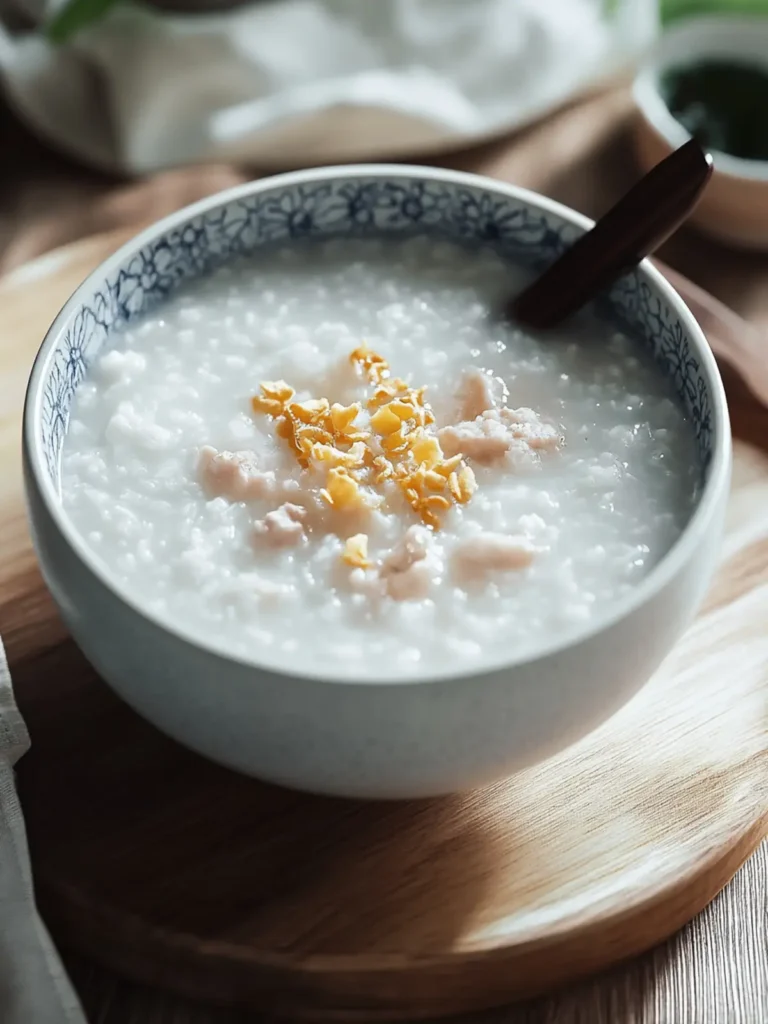
Chinese Congee (Rice Porridge) Recipe FAQs
What type of rice should I use for the perfect congee?
The best choice for your congee is long-grain white rice, which offers a beautifully creamy texture. If you prefer, you can also use jasmine or short-grain rice for a different mouthfeel. Just make sure to rinse the rice thoroughly until the water runs clear to avoid an overly sticky result!
How should I store leftover congee?
Absolutely! Store any leftover Chinese congee in an airtight container in the refrigerator for up to 3 days. When you’re ready to reheat, add a splash of water to reclaim its creamy texture and gently warm it on the stove, stirring occasionally to maintain consistency.
Can I freeze Chinese congee?
Very! To freeze your congee, pour it into freezer-safe containers and store it for up to 2 months. When you’re ready to enjoy it again, thaw overnight in the fridge, then reheat gently on the stove, adding water or broth as needed to restore the creamy texture.
I want my congee thicker. Any tips?
Of course! If you desire a thicker congee, simply let it cook for a longer time, around 75-90 minutes, and make sure to stir it more often to prevent sticking. If it’s getting too thick, you can gradually add water to reach your desired consistency, all while tasting along the way to adjust seasonings!
Are there any dietary considerations for this recipe?
Yes, the beauty of congee lies in its versatility! If you’re cooking for someone with dietary restrictions, you can easily omit the proteins or use plant-based options like tofu. Additionally, using gluten-free soy sauce can cater to gluten sensitivities, making this a suitable dish for everyone at the table.
Why is rinsing the rice important?
Rinsing the rice is essential to remove excess starch, which can lead to overly sticky congee. By rinsing until the water runs clear, you’ll ensure a smoother consistency in the final dish, making every spoonful a delightful experience!
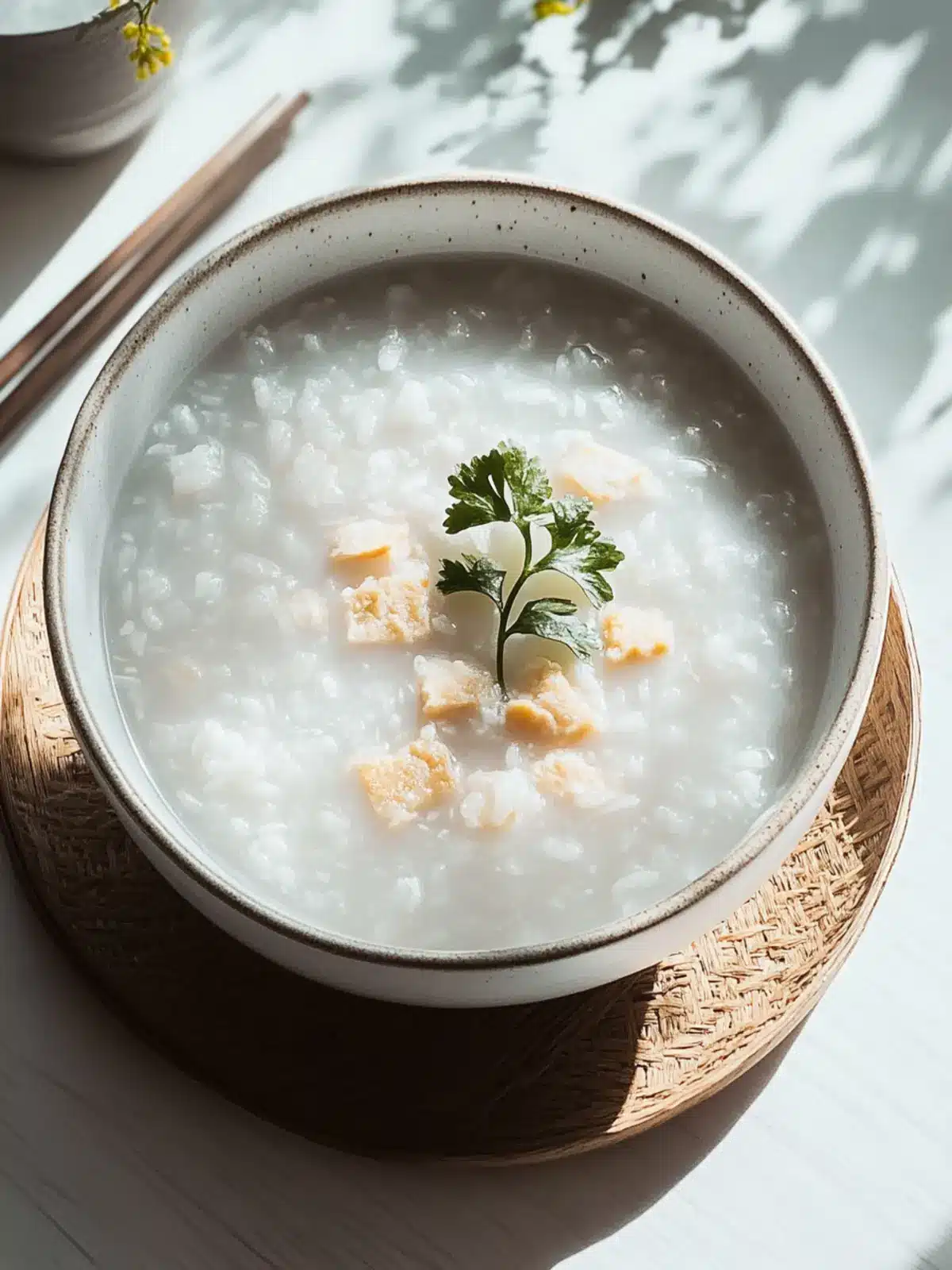
Warm Up with Chinese Congee: Your Comfort Food Cure All
Ingredients
Equipment
Method
- Rinse the long-grain white rice under cold water until the water runs clear.
- In a large pot, combine the rinsed rice, water or chicken broth, and fresh ginger. Bring to a boil over medium heat.
- Once boiling, reduce the heat to low, partially cover the pot, and let it simmer for 60 to 75 minutes.
- If you prefer a thicker congee, allow it to cook a bit longer.
- Add proteins during the last 15 minutes of cooking if using.
- Season your congee with salt and a splash of soy sauce once cooked.
- Ladle the warm congee into bowls and add your favorite toppings.